You are Profound, Nobody is Original, We All Should Embody Rothko
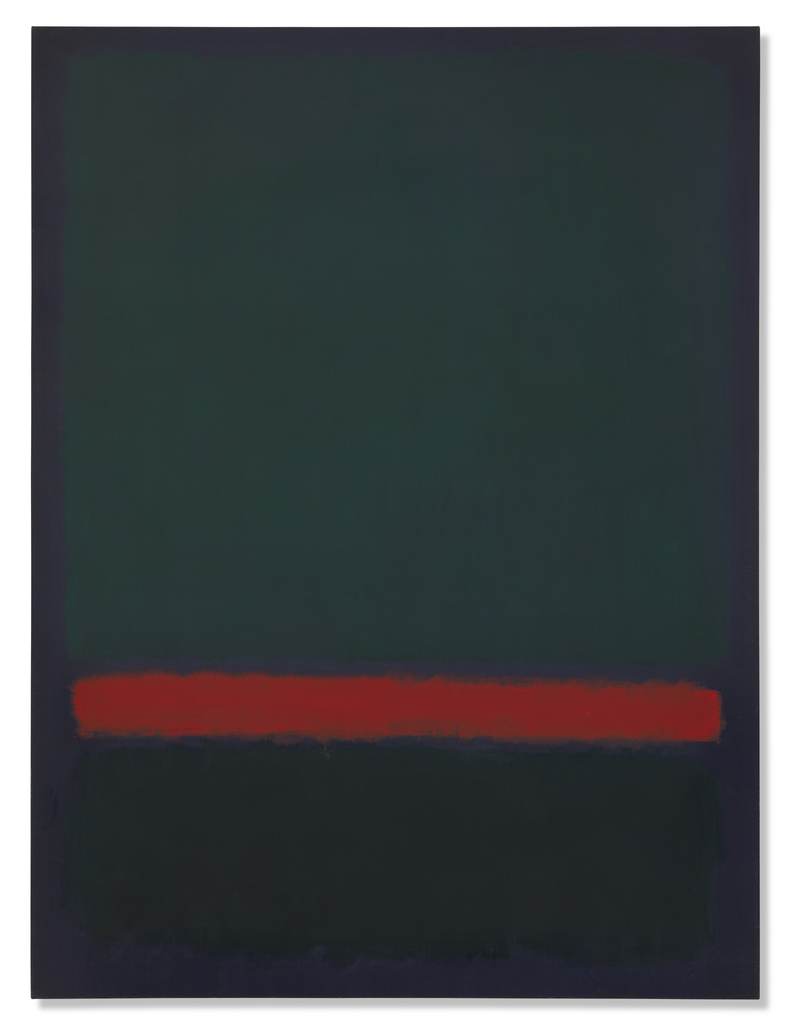
[Mark Rothko (1903-1970), No. 15 (Two Greens and Red Stripe), 1964. Oil on canvas. 93 x 69 in (236.2 x 175.3 cm)]
By: Aashi Mehrotra
In an age of convenience, what does efficiency achieve?
On a good morning, your AI-optimized calendar is filled out before you wake up. You can check the weather and dress accordingly. Your instant coffee takes less than two minutes to taste like on-the-go ambition. By the end of a good day, you’ve hit your protein goals and the gym. You’re tucked in for the night with your Oura Ring and Apple Watch waiting to monitor your sleep cycle. You attend parties to fulfill a quota of social gatherings — to prove yourself adept at making connections. You have achieved statistical perfection. Yet, you have also missed out on the entire day.
There is no such maturity to be reached that has not yet been discovered, grandmothered and passed down through art and blood. And such the race to grow up and prove oneself is futile; it has already been won and waned centuries before the birth of LinkedIn. The line between optimized control and absolute surrender is drawn thinner every day.
And it is not because we are simply trying to save time that we commit ourselves to this race of austerity. It is because we are trying to make something of ourselves. Every hour must contribute to something, every experience must teach us something, every achievement must distinguish us from the person we were yesterday. We are terrified of being ordinary, of having lived a life that could belong to anyone. So we optimize, achieve, and accumulate, hoping that somewhere in the process we will become someone worth remembering.
But optimization is turning us into robots. We crave career paths, roads already traveled before. You are a victim of late-stage capitalism and the efficacy of saving time. We are no longer being original; we are playing it safe. We mistake ambition and achievement for being more alive, more profound. But profundity doesn’t have prerequisites.
When was the last time you wore a shirt with a stain, took the long way home, laughed at a minor inconvenience or tried to live with intention and not outcomes? What are you racing towards and what could you possibly win?
The fact is, you can win nothing. Humans have lived for millennia, and along with us, so have the development of art, records of human experience and emotion. How self-important must you be to believe your feelings have never been felt before — that you may be something new?
We are all working with the same color palette, creating different paintings. Matter is neither created nor destroyed. We live in repeats of atoms creating neural responses, creating love and heartbreak and new humans, ceasing love and heartbeats and civilizations. Over and over. The carbon in you has been a lover and a mourner and a stranger on a bus, and it will be again after you are gone.
The same is true of ambition. The urge to optimize a day is one of the oldest urges there is. We made the wheel and better roads. We made sliced bread so we could eat on the go and preservatives so food would last longer. We have created convenience in the form of air fryers, streaming services, smartphones, and calendars, all to prioritize going “further” in life. But extraordinary desires are nothing more than extra-ordinary.
Perhaps the desire to improve our lives is itself proof that we are not as original as we imagine. The tools change, the centuries pass, but the impulse remains: we want more time, more comfort, more control over the uncertainty of being alive. We inherit not only the inventions of those who came before us, but their desires. And if even our ambitions are repetitions, what makes us so certain that our thoughts, our feelings, or our experiences are any different? And if there is nothing left to discover in the human psyche, what does it mean to be original, and how can we achieve it?
Option one: try to block out any kind of inspiration. Eradicate any previous examples that might conflate ideas or hinder imagination unconsciously or subconsciously. Unfortunately, this option is not feasible. It is not possible to be a totally blank slate because humans are the accumulation of their experiences and genetics.
Option two: gather as many ideas as possible. Research every take there is to consider, until there is no opinion in particular to draw from. Take a sentence from one, a phrase from another and combine them into something you truly believe in. Never mind if it has been said before. It is your personal truth.
Then, that begs the question: is there a difference between being true to yourself and being original? Are they the same? Is it even possible to be original? Thankfully for us, originality does not matter. It does not dictate our profundity.
Your existence means you are profound. It was never something to earn. Profundity is the default, not the prize.
Your emotions do not make you unique, and they do not make you original, but they are still profound nonetheless. You feel so deeply that you imagine discovery, because how could something so potent not be all-consuming? How could it not fill every conversation and overwhelm our society? So you turn to the works of those before you, and there you find yourself, your emotions staring back at you in the eyes of Greek statues, medieval paintings, ceiling murals, and extravagant burial chambers.
These inventions have not conceived newfound emotion; they only give that emotion form, something we can encounter outside ourselves and recognize without having to explain it. The grief of someone who lived a thousand years ago is not our grief, and yet we understand something of it. We do not need to have lived their lives to recognize the humanity they left behind.
The most human we can be is deeply mundane. Artist Mark Rothko champions this idea. We all operate with the same basis of emotions, of neural networks, of DNA, with a few different sequences. Rothko did not want to invent new emotions. He simply wanted to physically represent his experience: the mundane experience of human tragedy. He wanted to preserve heartbreak and sadness and love and gore and oppression.
So he painted rectangles with blurred edges and varying colors. Something so basic it looks like an eight-year-old could have done it. And yet an eight-year-old could not have gathered enough tragedy or minor inconveniences to create such rectangles.
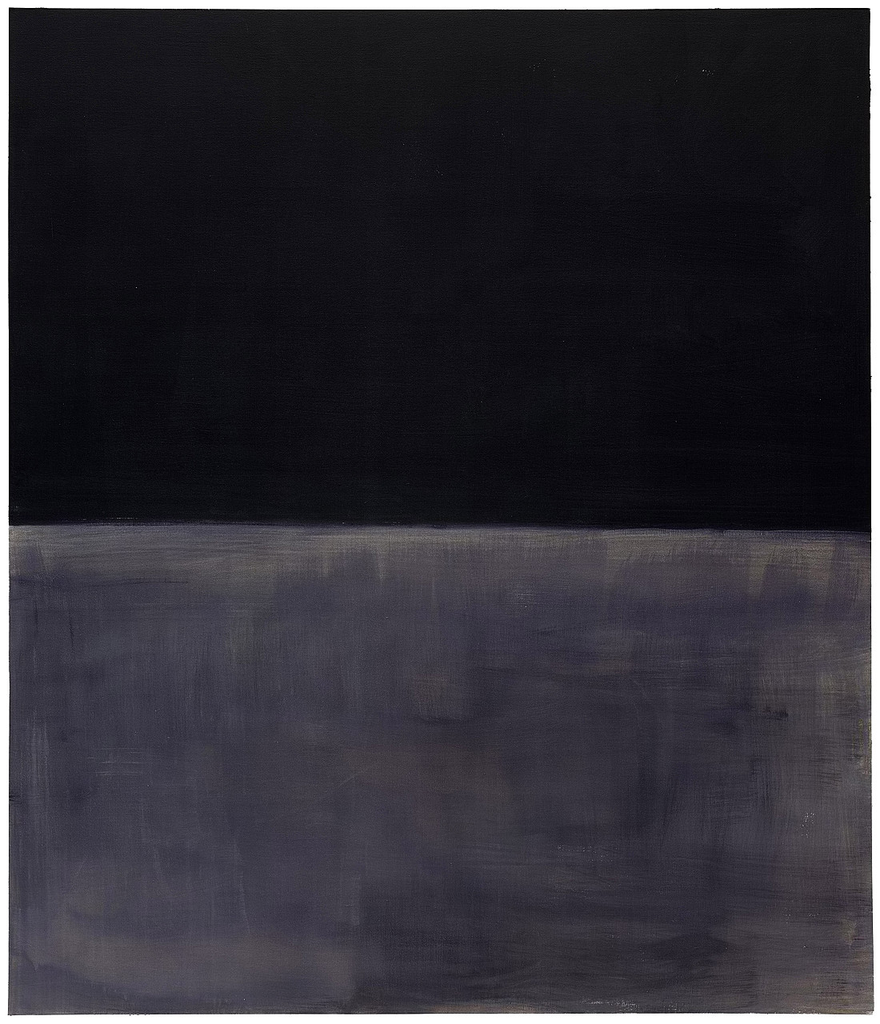
[Mark Rothko, Untitled (Black on Gray), 1969–70. Acrylic on canvas, 80 1/8 x 69 1/8 inches (203.3 x 175.5 cm), Solomon R. Guggenheim Museum, New York]
The point of this piece is not to argue that we must give up our dreams of prolific careers, to only pursue art and spend days frolicking in fields of wildflowers. The point is to prioritize intention and specific goals. To make sure your efficiency saves time that you can then spend intentionally on pursuits of passion, not on further fruitless efficiency. To disregard embarrassment over minor inconveniences and wrinkly shirts. To be more late and give people grace, because they are human.
What could we achieve by being more successful cogs in the machine? History will not remember you any more fondly than it does the billions of people who came before you, who experienced your same heartbreak, your same love, your same loss. So what does it matter? Live your life the way you can, and not the way anyone else should remember it.
Because even if you are remembered, if a painting of your face, of your grief, is shown in a museum a thousand years from now, people will not look at it and see you. They will see themselves. Thus is the repetitive nature of art and the repetitive nature of humanity.
Leave a comment