
Biodegradable Resources
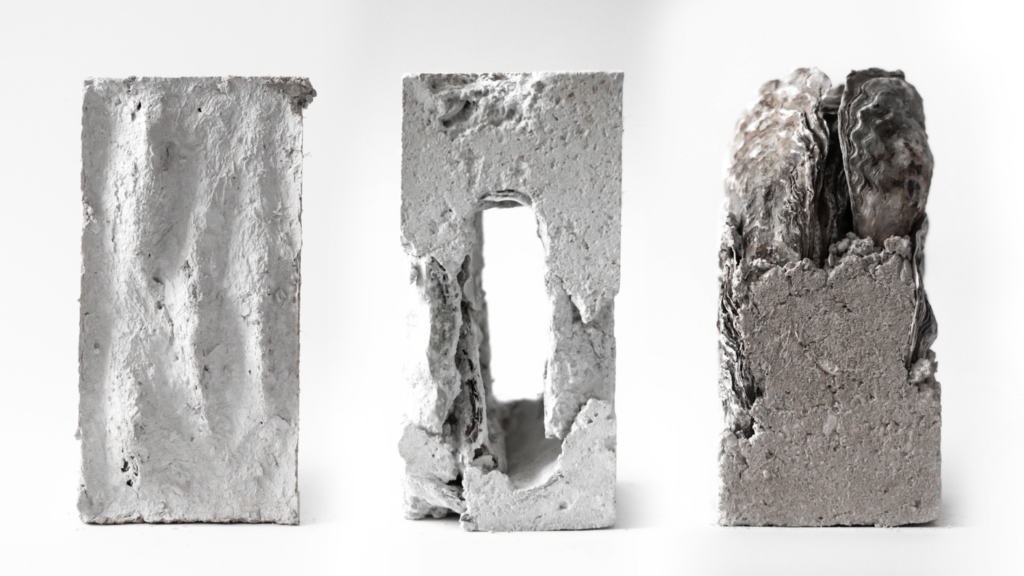
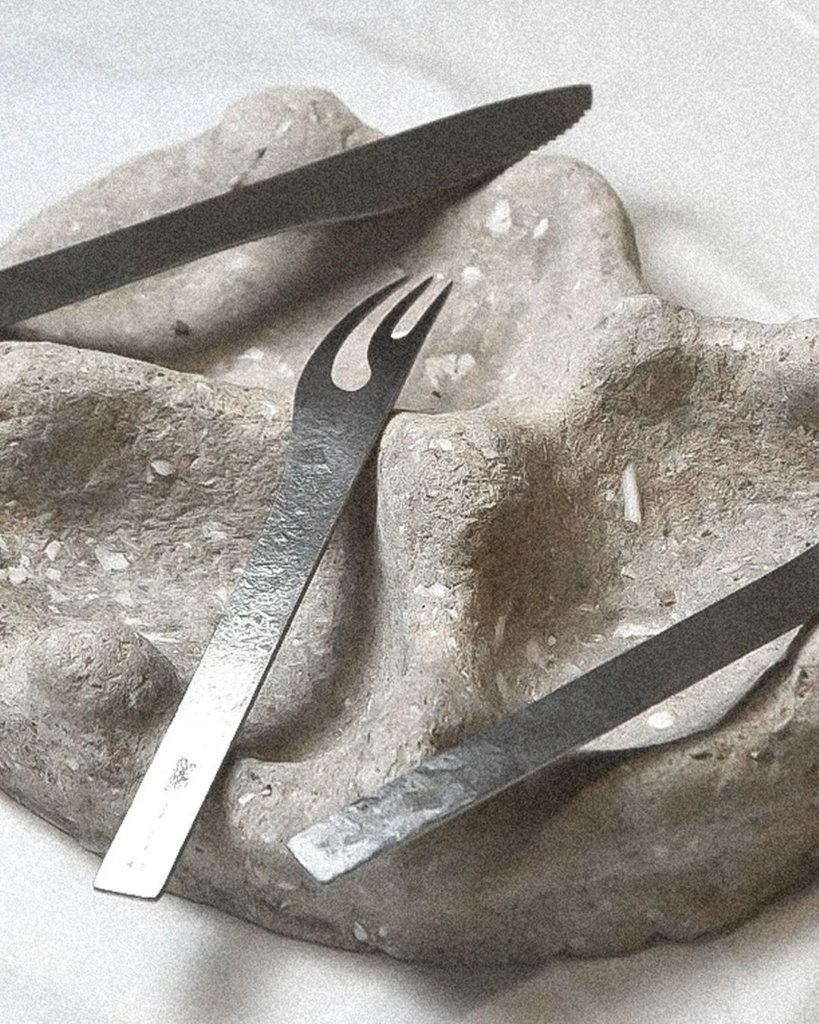
Oyster Matter prototype, Bartlett B-Pro Show, 2020
By: Allison Wallis
Biodegradable resources are used as a sustainable alternative to traditional plastics. Different biotextiles and recycled waste are used to create unique products for interior environments.
Interior spaces heavily depend on the materials, textures, and placement of objects in a room. Varieties of textures and materials can create different ambiences, such as comforting and moody spaces. Materials such as glass, plastic, and wood are common everyday materials, but are not the most sustainable resources. Researchers have developed biodegradable materials that provide a sustainable resource for furniture and interior design. Biodegradable materials are made from recycled products that can be broken down into organic compounds and are easily absorbed by the environment. Some biodegradable materials include bacterial cellulose, oystercrete, algae plastic, and others.
Bacterial cellulose is composed of pure cellulose, the woody exterior of plants. To create bacterial cellulose, plant cellulose must be isolated, but it is difficult to achieve because of the presence of other substances. On the other hand, bacterial cellulose is synthesized by growing bacteria on cellulose, creating a sustainable and biodegradable material. Only several bacteria, including the Gram-negative bacterium Gluconacetobacter xylinus, according to the National Library of Medicine (NIH), can synthesize bacteria and cellulose to form this product. This material is highly organized and contains several bonds (Van der Waals bonds), creating a compact and strong structure. By controlling the amount of hydration the material receives, the texture of bacterial cellulose becomes thinner and moldable, creating a translucent surface. This process for developing bacterial cellulose is still being studied and researched for future everyday use. The pace of our current technology improves research for these materials, and facilities can easily manipulate environments for experimentation. Additionally, the importance of resources such as bacterial cellulose creates new possibilities for sustainability in architecture and interior design.
Renewable and recyclable materials are more sustainable than one-time-use plastics since they can be decomposed or recycled. Bacterial cellulose has a variety of uses in architecture; for example, many interior designers use it to create furniture. Natural Urbano, a design studio, created a lampshade consisting of five bacterial cellulose sheets, demonstrating the textures and lighting from a biofabricated product. The design is a unique approach to a standard lamp. The biofabricated material’s ruffles and texture create depth and character to an interior space. Biodegradable resources such as bacterial cellulose create a creative space for designers to experiment with sustainable mediums that are beneficial for the planet. Researchers also experiment with these biofabrics to develop different characteristics that can be versatile for future projects.
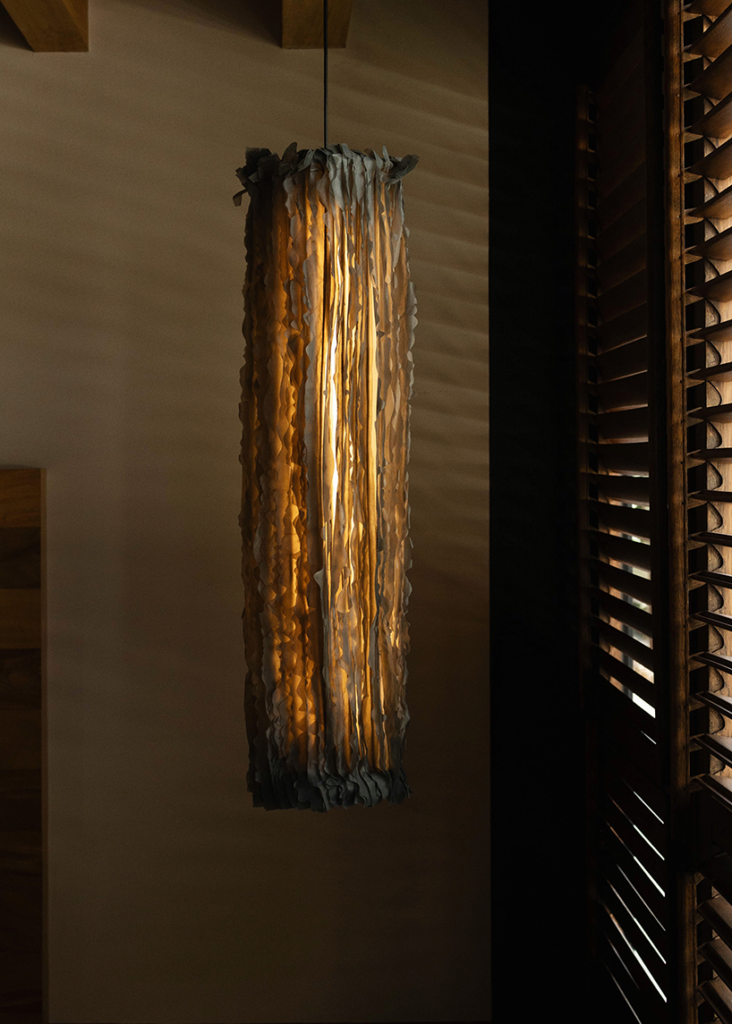
Lapso Sculptural Lamp. Natural Urbano, 2024
The Adam Sheet is another biotextile similar to bacterial cellulose. It is an organic fabric made out of apple skins and pulp. The purpose of this fabric is to create a translucent and flexible material that recycles everyday waste. The Japanese design studio Sozai Center created the Adam sheet, inspiring other studios to create similar biotextiles from different waste products. For example, other researchers used the scraps from sweet potatoes to create a similar fabric to the Adam sheet, but with similar properties. The Adam sheet is first created into a powder, then hydrated for flexibility. Small amounts of bioplastics are added to the fabric, which presents questions about whether the material is actually a sustainable product. Since biofabricated plastics are designed to be a sustainable alternative, they decompose more quickly than regular plastic, even with a small addition of microplastics. The production of these biotextiles can create a recycling system that repurposes organic waste, limiting the amount of waste in landfills and surrounding ecosystems. However, isolating the organic material from landfills and composts can be difficult. The bioplastics in the Adam sheet are a sustainable alternative to traditional plastic since it reuses excess waste.
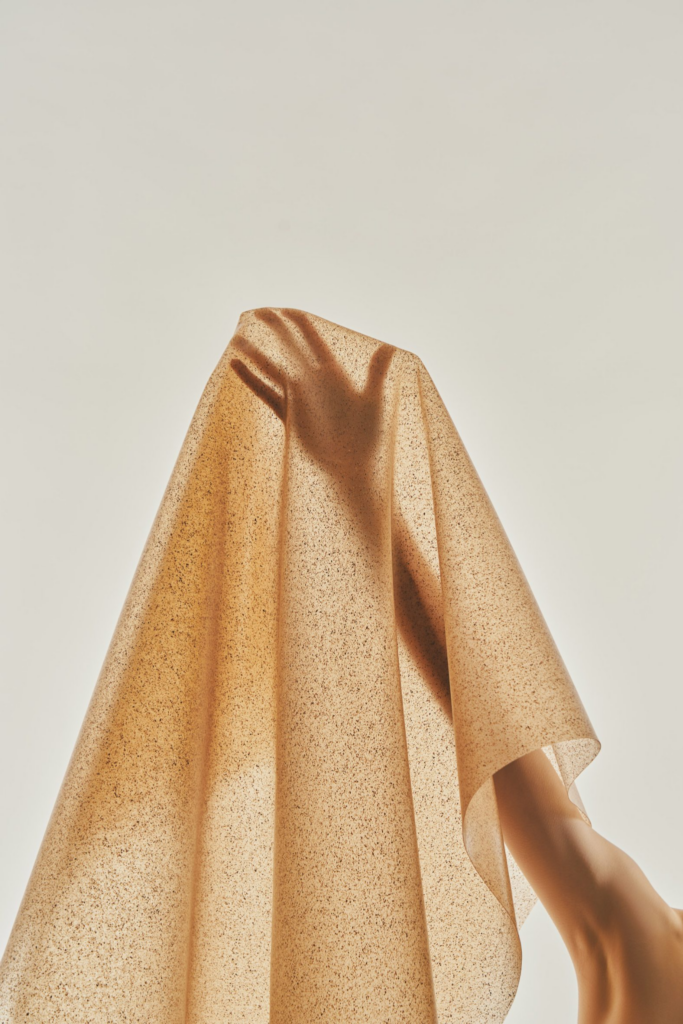
Sozaii Center, 2024.
Oystercrete is a resource made as an eco-friendly alternative to cement. This material is made up of recycled shells, sand, and clay. In order to produce a cement-like product, oyster shells (CaCO3) are heated up to 1200 °C to make quicklime, a similar substance to calcium oxide. Quicklime is a dry substance and requires water to be hydrated before being used as a concrete alternative. Society’s waste of oystershells provides a beneficial resource that can be recycled into functional materials such as tiles, countertops, and decorative household items. Oystercrate is used in decor such as brick tiles or decorative wall panels, to create a natural aesthetic from the oyster’s rugged and speckled appearance. The appearance creates an aesthetic that is different from the standard grey monotone concrete. Oystercrate provides texture and variety to architectural designs while also promoting sustainable and biodegradable resources. Interior design unites different substances to create texture, ambiance, and emotions in a materialistic space.
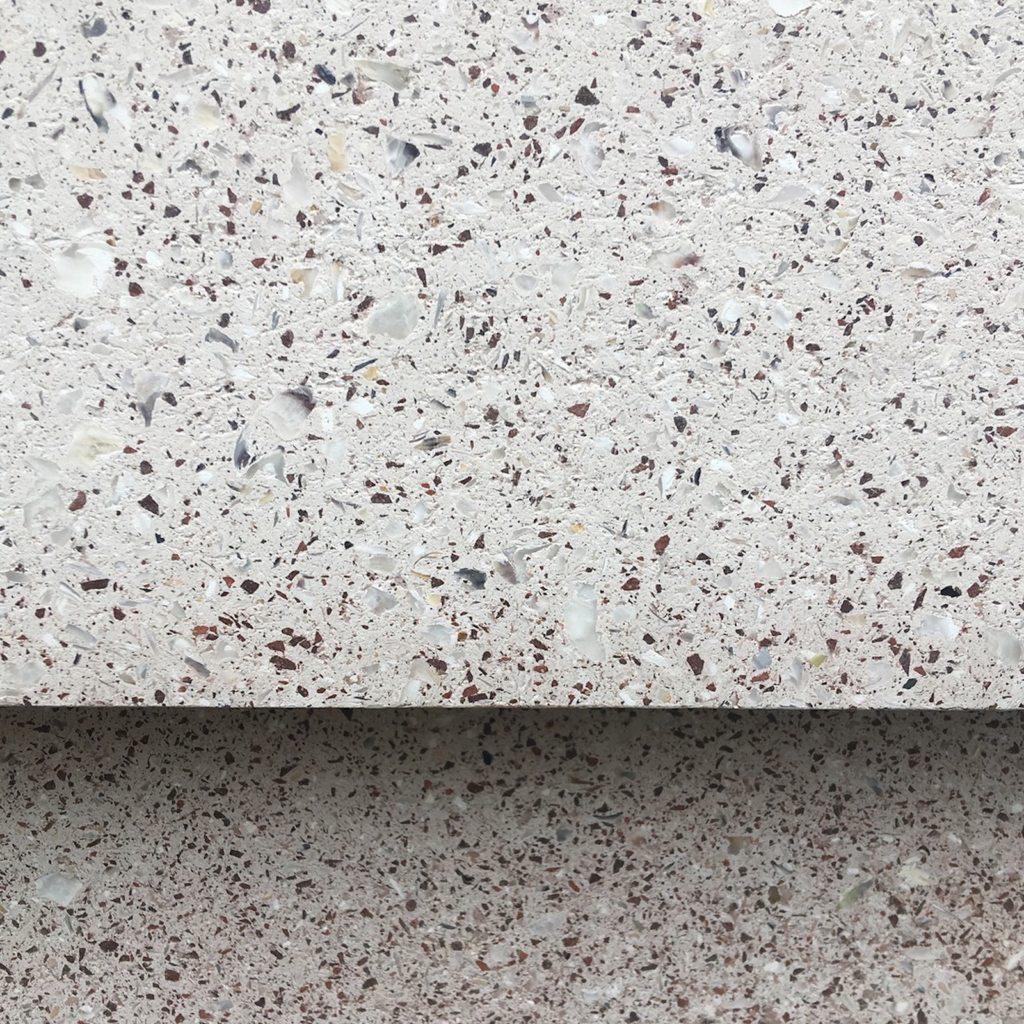
Ground Studio Landscape Architecture, 2024 Matter Forms, The offsite agency
One of the main concerns with plastics is that they take several years to decompose. When plastics decompose, they remain as microplastics, which are still harmful to our environment. As a result, the amount of pollutants from plastics builds up faster than the rate of decomposition. An alternative to traditional plastic is Algae Plastic, which decomposes at a quicker rate and does not contain macroplastics. This was created and researched by scientists at the University of Washington. Their research included a variety of plastics with spirulina, a form of green-blue algae. Polymers are extracted to create the base of the plastic, then modifiers are added to solidify the product. While producing a strong, durable, and recyclable plastic would be beneficial to replace ordinary plastic, the cost of production makes this product a costly alternative. Manufacturing facilities cannot meet the demands of producing algae plastics efficiently and inexpensively. However, designers Eric Klarenbeek and Maartje Dros plan to manufacture these plastics and make them affordable to everyone. Eric Klarenbeek and Maartje Dros use algae plastic as filament for 3d printed designs. Some of the products include vases, bottles, or bowls. Their primary goal is to reduce the amount of synthetic plastic used and replace it with biodegradable materials. The combination of using 3d printers and algae plastics is overall impressive and inspires future innovations and projects. The development of algae plastic is still developing, but technology and research create a pathway for sustainable plastic replacements.
The development of biodegradable materials creates variety and customization for interior design and architecture. Designers use sustainable biofabrics for creativity, creating products that showcase the durability and versatile components of each unique material. With further research and experimentation, more sustainable plastic alternatives can be created for a better impact on the environment.
Sources:
Arroyo, Matia. “Bacterial cellulose transforms into translucent ruffled lighting sculptures.”
Designboom, 5 October, 2025. https://www.designboom.com/design/bacterial-cellulose-translucent-ruffled-lighting-sculptures-polybion-natural-urbano-lapso-10-05-2025/. Accessed 10th, April 2026.
The Offsite Agency. “Matter Forms.” Theoffsiteagency.com, 2026,
https://theoffsiteagency.com/projects/matter-forms. Accessed 10 April. 2026.
Yang Guang and Gama Miguel F. “Bacterial Cellulose”
https://www.sciencedirect.com/topics/biochemistry-genetics-and-molecular-biology/bacterial-cellulose. Accessed 9th, April 202.6
Lahiri, Dibyajit. “Bacterial Cellulose: Production, Characterization, and Application as
Antimicrobial Agent.” International Journal of Molecular Sciences, vol. 22, no. 23. Nov. 2021 https://pmc.ncbi.nlm.nih.gov/articles/PMC8657668/. Accessed April 9th, 2026.
Englefield, Jane. “Adam Sheet is a waterproof biotextile made from apple waste.” Dezeen, April
14, 2024. Accessed April 10th, 2026. https://www.dezeen.com/2024/04/14/adam-sheet-waterproof-biotextile-apple-waste
Morris, Ali. “Dutch Designers Convert Algae into Bioplastic for 3D Printing.” Dezeen, 12 Jan.