
Badminton: More Than a Backyard Game
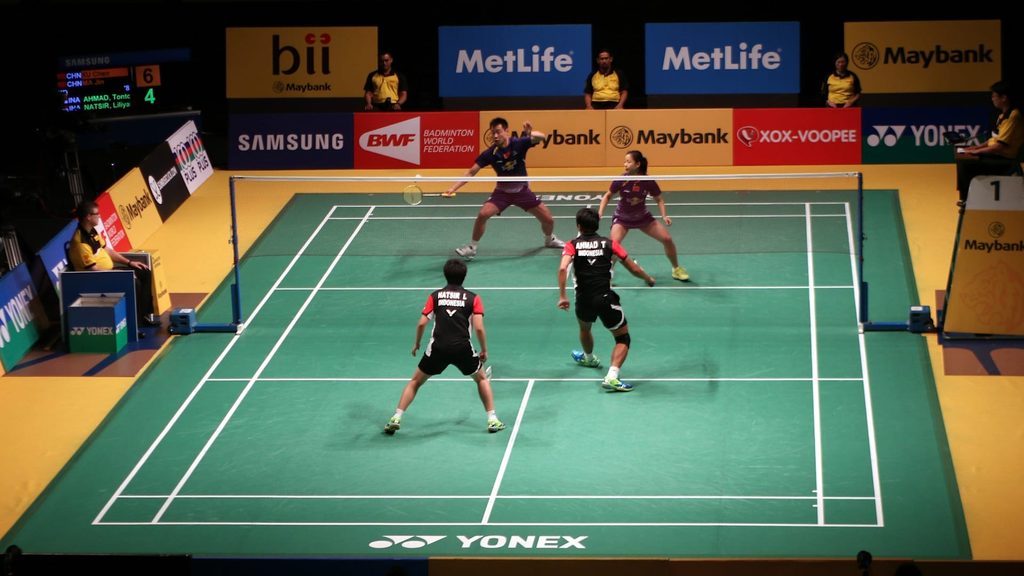
Image Credit: https://www.olympics.com/en/news/badminton-court-size-dimension-measurement-length-width-net-height-service-line
By: Om Savani
Badminton may look like a simple backyard game, but it’s more than most people think. From its history to the speed, skill, and strategy it takes to play, badminton is much harder than it looks.
Introduction: More Than Just Hitting a Shuttlecock
When people think of badminton, they might think of friends hitting a shuttlecock back and forth in their backyard. But badminton becomes much harder when played seriously. Players must move quickly, react fast, and make smart decisions in every rally.
Unlike other sports such as basketball or soccer, badminton uses a shuttlecock instead of a ball. A normal shuttlecock is made with 16 feathers attached to a rounded base. Its shape helps it move through the air differently from a ball. The shuttlecock slows down after being hit, which makes the way it moves different from other sports equipment. Players need to learn how to control their shots and predict where the shuttlecock will land. Even a tiny mistake can give the opponent an easy point.
Badminton may look simple to most people, but to play it well, you need lots of practice, control, and skill. Professional players spend lots of years improving their skills and footwork before reaching a high level.
The History of Badminton
Badminton has been around for hundreds of years in different forms. One early version was a game called the battledore and shuttlecock, in which players hit a shuttlecock back and forth using small paddles. The goal was to keep the shuttlecock in the air for as long as possible.
The modern version of badminton developed during the 1800s. British officers in India played a game similar to the sport, badminton, as we know it today. The game later became popular in England, where its rules continued to form and develop. In 1893, the Badminton Association of England was formed to help organize the sport and set its rules. As the game became more organized, it spread to other countries and started to get more popular around the world.
Badminton became an official Olympic medal sport in 1992 at the Summer Olympics in Barcelona, Spain. This introduced the sport to more people and gave players the chance to compete on a worldwide stage. Today, players from many countries compete in big tournaments, and top world players train for years to reach the highest level.
There are other big badminton tournaments besides the Olympics. The BWF World Championships is one of them. The Thomas Cup and Uber Cup are also important because players compete as a team for their country.
Badminton is most popular in countries such as China, Indonesia, South Korea, Japan, Malaysia, and the United States. These countries have lots of successful players who compete in very big world tournaments, which attract viewers from around the world.
Over time, badminton has continued to grow as more people become interested in playing and watching it. Local clubs, school teams, classes, and big tournaments give players different ways to enjoy the sport and, for players to improve their skills.
How to Play Badminton
Badminton can be played with 2 players in singles or 4 players in doubles. The goal is to hit the shuttlecock over the net and land it inside the opponent’s court. Players try to make each shot difficult to return while keeping the shuttlecock from landing on their own side.
A match is usually played as the best of 3 games. Each game goes to 21 points, and a player or team must win by 2 points unless the score reaches 29-29. Once the game is tied, the next point wins the game. This scoring system keeps matches serious because players must stay focused until the very end of the game. Badminton games in classes are usually shortened to 1 match of 11, 15, or 21 points.
Players must also follow certain rules when serving the shuttlecock. A serve starts each rally, and the shuttlecock must travel into the correct service area (ahead of the service line and within the bounds of the court). If the shuttlecock lands outside of the court or a player breaks the rules, the opponent earns a point.
Players can also use different serves. A low serve goes just over the net, and a high serve goes toward the back of the court. A flick serve looks like a low serve at first but goes farther back, which can catch the other player off guard.
There are several types of shots in badminton, and each one serves a different job. A clear sends the shuttlecock high and far into the opponent’s court, giving the player more time to get ready and into place. A drop shot makes the shuttlecock fall close to the net, going in an arc, which forces the opponent to rush forward. A net shot is a soft and gentle hit played close to the net. It sends the shuttlecock just over the net into the opponent’s front area. It forces the opponent to rush forward and hit the shuttlecock. A drive is a fast, low, and flat attacking shot hit horizontally just above the net from around mid-court. A lift is a shot hit from close to the net deep into the opponent’s backcourt. A smash sends the shuttlecock at a downward angle at a high speed, making it difficult for the opponent to return.
Clear:
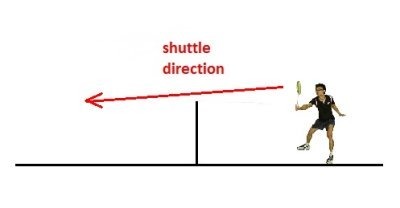
Drop:
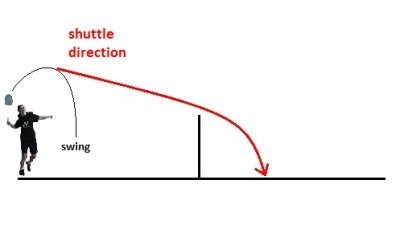
Net:
Drive:
Lift:
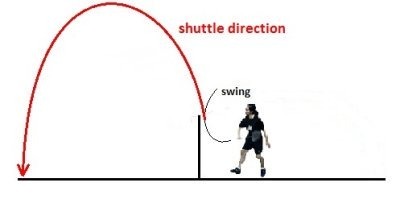
Smash:
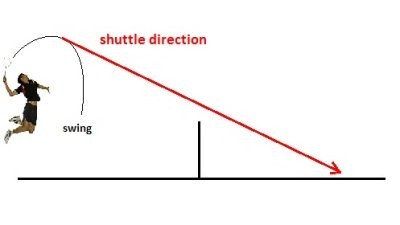
Knowing when to use each shot is an important part of the game. Players cannot just hit the shuttlecock as hard as possible whenever they want. They must consider the opponent’s position and choose the shot that will most likely let them win the point. Sometimes, a careful and thoughtful shot can be more effective than a hard one. An example of this could be a drop shot or a net shot played right after your opponent has gone to the back of the court to cover a deep clear. Another reason a thoughtful shot like this could be effective is that it disrupts your opponent’s timing and can mess up their movement/momentum. It makes the other player run and maybe even sometimes catch them off guard.
Players also need to understand when to play defensively and when to attack. A defensive shot can help them recover from a difficult place, while an attacking shot can put pressure on the opponent. Learning when to use which shot takes time and experience.
Why Badminton Is Harder Than It Looks
One of the biggest challenges in badminton is how quickly players must react. The shuttlecock can travel across the court at incredible speeds, especially during a hard smash. Professional players have recorded smash speeds of over 300 kilometers per hour. Players must watch their opponents move into the correct place before the shuttlecock reaches them. This shows why players need really quick reactions during matches.
Footwork is another important skill. Players constantly move forward, backward, left, and right throughout a rally. They have to reach the shuttlecock while staying balanced to return it well. If they cannot reach the birdie in time, they might miss the shot or return it weakly.
The shoes players wear are important too. They move side to side a lot, so shoes need to grip the floor. Regular running shoes might not be the best choice because they are made more for moving forward. Badminton shoes can help players stay on their feet when they change direction.
Stamina is just as important. Some matches can include long rallies that require players to keep moving without becoming too tired. Players need to keep their energy and focus throughout the match.
Badminton takes excellent control as well. Players need to move their feet, see the shuttlecock, and swing their racket at the right moment. They must do all of this while trying to guess their opponent’s next move. Learning to do these actions together takes time and repeated practice.
Another challenge is that players must make decisions in a very short amount of time. They may only have a moment to decide whether to smash, clear, drop, or do any other move on the shuttlecock. Choosing the wrong shot can give their opponent a lead. This makes experience and practice important during serious matches.
The Strategy Behind Badminton
Although speed and strength are important, a plan can also make a huge difference in badminton. A lot of the time, players try to move their opponents around the court instead of hitting every shot directly at them. For example, they might send the shuttlecock to the back of the court and then hit a drop shot near the net.
This forces the opponent to run more and makes it harder for them to return the shot. Players also study their opponents to find their weaknesses. If an opponent struggles with shots on one side of the court, a player might try to target that area more often.
Doubles matches require coordinated teamwork, and both players must talk and decide who will return each shot. They also need to cover different parts of the court without getting in each other’s way. Good communication is very important in doubles matches.
Players might also need to change strategies as a match goes on. A plan that works at the beginning of the game may not work at the end if the opponent figures it out. Players have to think ahead, make decisions quickly, and change their plans based on how the match is going.
Badminton as a School and Community Sport
Badminton is also a sport that can bring people together. Many schools and community centers offer badminton as an activity to play because it can be played by people with different levels of experience. Beginners can learn the basic rules and improve over time, while more experienced players can play in serious matches.
Another reason badminton is popular is that it does not require a large field or expensive equipment to play. A racket, a shuttlecock, a net, and an open space are enough for a basic game. This makes it easier for people to try the sport and see if they like it.
Badminton rackets are pretty light, which makes them easier to swing fast. Some are made from graphite, so they are strong without being too heavy. The strings matter too. Tighter strings can give players more control, but they usually have a smaller sweet spot and require more skill. Looser strings can give players more power with less effort, but they may have less control. Players might have to try a few rackets before they find one they like.
Conclusion
Badminton is seen as a casual activity, but playing it well takes quite a bit of skill. Players need quick reactions, excellent footwork, good control, and the ability to make decisions really quickly (under pressure). They also need to have the energy to keep moving around the court and the focus to avoid making mistakes. The sport has a long history, and lots of people watch and follow it. From casual games to big tournaments, badminton can be played at many different levels. It is also a sport that people can continue improving, as they learn new skills and plans. Badminton can also be a good way to stay active and spend time with others, including friends and family. Badminton encourages movement, teamwork, focus, and practice. Whether someone plays in a team or with friends, the sport is really fun and enjoyable to play.
Works Cited
“About BWF | BWF Corporate.” Bwfbadminton.Com, 2020, corporate.bwfbadminton.com/about/. Accessed 15 Oct. 2026.
Britannica. “Badminton | History, Rules, Facts, & Champions.” Encyclopædia Britannica, 21 May 2019, www.britannica.com/sports/badminton. Accessed 15 Oct. 2026.
Olympics. “Badminton: Olympic History, Rules, Latest Updates and Upcoming Events for the Olympic Sport.” Olympics.Com, 2024, www.olympics.com/en/sports/badminton/. Accessed 15 Oct. 2026.
Super User. “Badminton Rules: How to Play Badminton | Rules of Sport.” Rulesofsport.Com, 2019, www.rulesofsport.com/sports/badminton.html. Accessed 15 Oct. 2026.
Wikipedia Contributors. “Badminton.” Wikipedia, Wikimedia Foundation, 22 Apr. 2019, en.wikipedia.org/wiki/Badminton. Accessed 15 Oct. 2026.
Master Badminton. “Types of Badminton Shots | Badminton Clear, Drop Shots, Net Shots and Smashes.” Master Badminton, 16 May 2016, masterbadminton.com/badminton-shots.html. Accessed 24 Oct. 2026.
Leave a comment