
Is it going to pop? The multi-trillion dollar AI Bubble
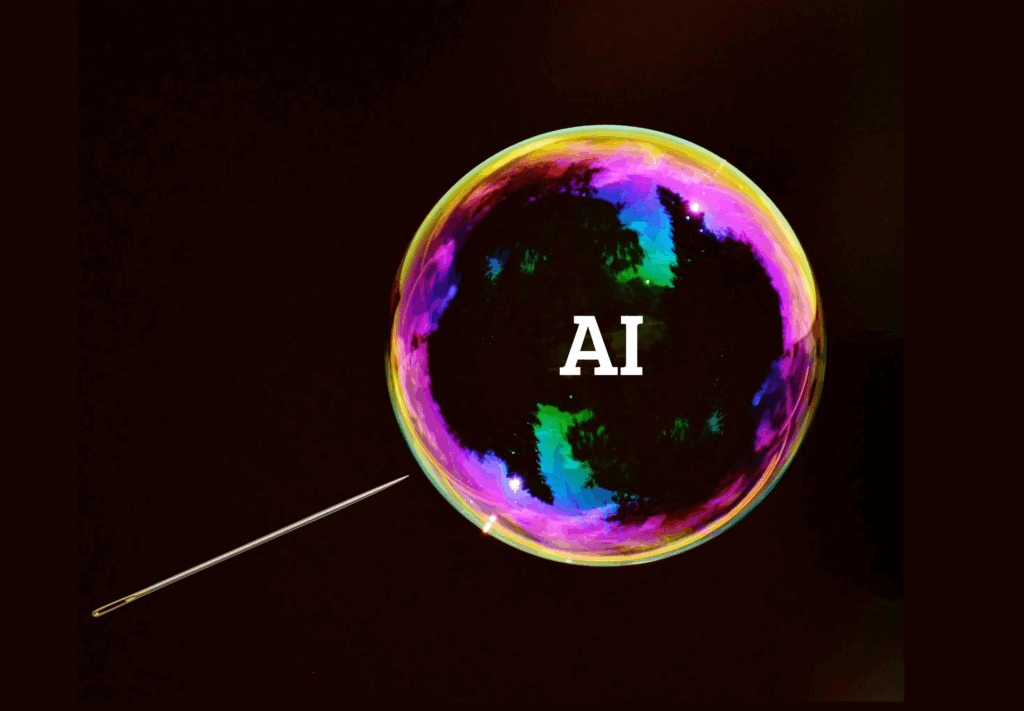
Image Credit: Pexels and Wikimedia Commons
By: Hiren Shah and Taran Nulu
Trillions of dollars are being invested into AI, forming what several people are calling an economic bubble. But why? What is the end goal? And is it worth it?
The popularity of artificial intelligence is at an all-time high. Companies like OpenAI seem to be making huge strides in their technology with products like Sora 2, which can produce lifelike videos. But for most AI companies, innovations like Sora are just a stepping stone to the final goal: Artificial General Intelligence (AGI).
AI models, like ChatGPT, cannot innovate. Essentially, AI models have learnt from vast amounts of data from the internet and other sources. While it trains on this data, it detects complex patterns, and creates outputs based on that. Because of how much data it was trained on, a lot of AI chatbots seem like they can answer any question. However, all their responses come from things it has learnt from. AI chatbots are basically an extremely advanced version of a search engine. This is unlike humans who can come up with new ideas outside of what they have learnt. AGI would be more like humans and be able to come up with brand new ideas, outside of what it was trained on. OpenAI has claimed that this will be achieved in the next few years. But will it?
We believe that AGI will not be achieved anytime soon. Currently, AI models, like ChatGPT, are modeled on the human brain. They take in millions of parameters, perform a tremendous amount of computations, and output a result. Some companies believe that the solution to achieving innovation is to just make the models larger—more parameters, more calculations, better outputs. The human brain, which AI was modeled after, takes in around 100 trillion inputs. Models like ChatGPT only take in a few trillion. Making the model larger, to the size in which it achieves the complexity of the human brain, would need around a 50x size increase in some cases, which would require a tremendous amount of resources. Due to our lack of understanding of the human brain, achieving a larger AI model may not even be the right path to AGI. However, this is the path companies are taking.
A majority of the money that is being invested into AI is for data centers and cloud computing, which allow for the immense amount of calculations needed to train and run AI, and eventually achieve AGI. Data centers house thousands of GPUs, and cloud services make this processing power available through the internet. Without the hardware, there would be no artificial intelligence, causing high demand for GPUs and thus the rapid success of companies like NVIDIA.
This demand for more and more computation results in several environmental consequences. To facilitate so much technology running, data centers use up tremendous amounts of energy. A report from Lawrence Berkeley National Laboratory in 2023 showed that the electricity for datacenters was around 4.4% of the US’s annual electricity consumption. With the astronomical rise of AI and thus datacenters, the amount of electricity along with the emissions it results in has only increased. Despite this, trillions of dollars are invested into AI companies.
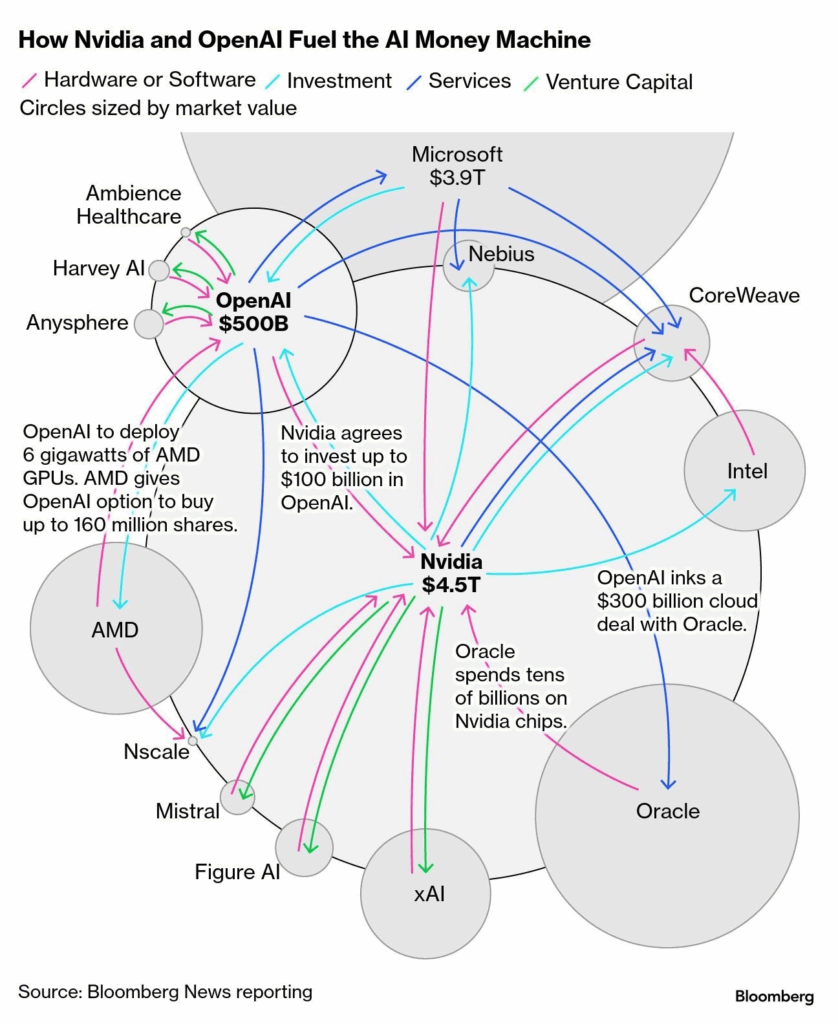
Image Credit: Bloomberg News reporting
Looking at the past few years, the title of “Artificial Intelligence” has influenced the growth of the stock market. But is this growth sustainable? Let’s look at some brief background information first.
Much of the market’s growth for the past 2 years has been due to the excitement and speculation about the future of AI. Hundreds of billions of dollars have been pumped into companies developing cloud infrastructure and computing power capable of supporting the next generation of AI technology. Investors are betting that this technology will transform the global economy in all aspects of life.
One of the biggest players in the market and what most people refer to when it comes to artificial intelligence is OpenAI. Ever since the release of ChatGPT, OpenAI has become pretty much the face of the AI revolution. The company’s innovation in natural language processing has completely redefined how people interact with technology.
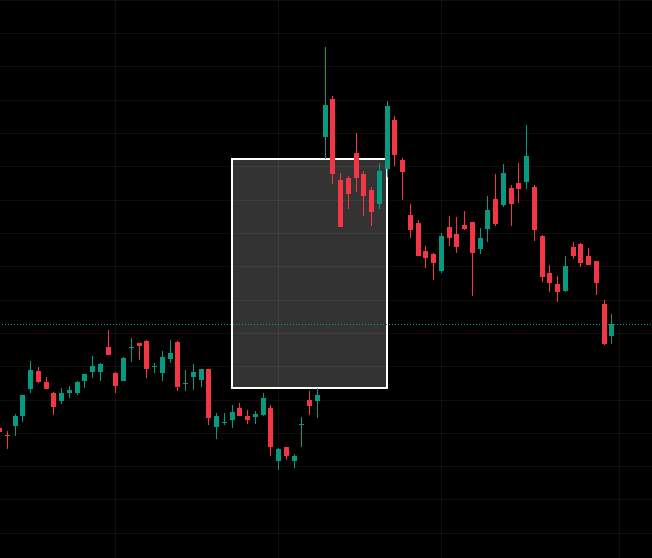
Recently, OpenAI made a five-year deal with Oracle in which OpenAI will pay 300 billion for cloud infrastructure to be built. This also led OpenAI to deal with AMD to supply high-performance processors and GPUs as a backup to NVIDIA. All these deals led the companies’ stocks to rise over 30 percent from the previous day’s close.
Oracle (ORCL)
AMD
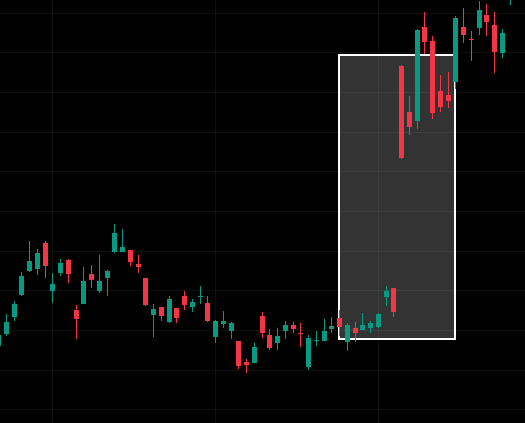
Image Credit: TradingView
This rapid rise in stock prices and investor excitement surrounding AI shares similarities in movement to the dot-com bubble of the late 1990s. Back then, any company with a “.com” in its name could attract massive amounts of investment. Similarly, today’s market is heavily influenced by the promise of AI. But this doesn’t necessarily mean that history will repeat itself. Which is why I believe that there are three scenarios on how the market will play out. First, AI keeps booming, and technology continues to advance at a rapid pace. Second, there will be a time in this decade in which valuations decline. Lastly, the bankruptcy of OpenAI would trigger a chain reaction across the entire industry.
While no one can predict the future of AI, one thing is for sure: this technology has already reshaped the global economy. Whether we witness continued growth, a market correction, or a major industry shake-up, companies will continue to work towards AGI. Even if things go south, technological advancements cannot be understood. While AI has caused tremendous harm, the technology is revolutionary and profoundly beneficial. And for the companies, if AGI is achieved, maybe the costs will be worth it.