
A Bittersweet Victory: Part 2
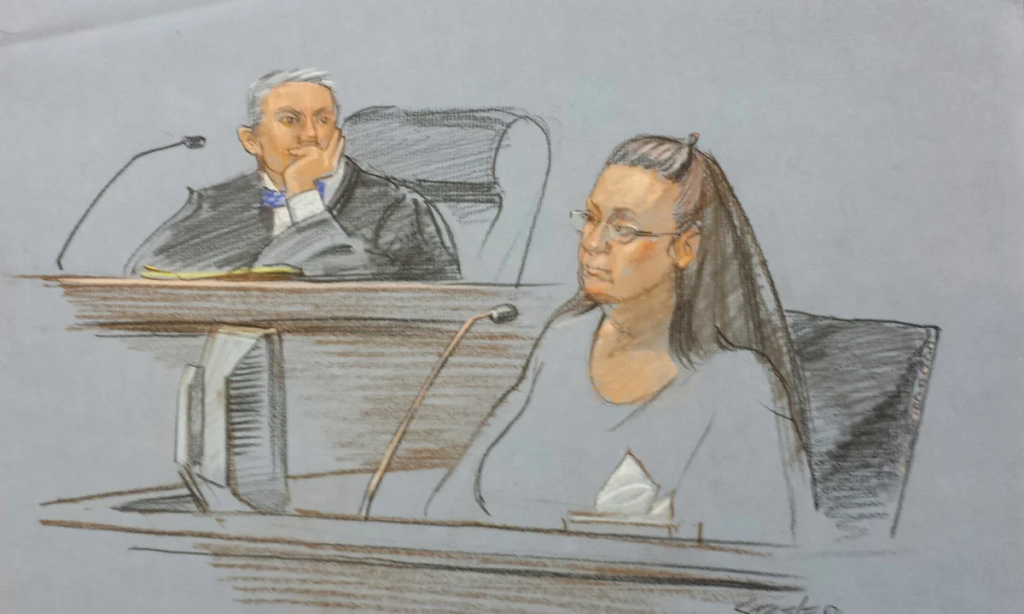
[Marlene Steele/Reuters]
By: Charlie Hoang and Aashi Mehrotra
A few weeks ago, the Supreme Court declined to revisit Obergefell v. Hodges, a landmark decision guaranteeing the right to same-sex marriage. Obergefell v. Hodges’ 10th year anniversary occurred this June, around the same time Kim Davis
In 2015, shortly after the Obergefell v. Hodges ruling was established, Kentucky county clerk Kim Davis, was ordered to issue marriage licenses to same-sex couples. Davis, however, declined to do so due to religious convictions. After a decade of lower court trials and unsuccessful trials, Davis decided to file a petition for a writ of certiorari, attempting to persuade SCOTUS to revisit the ruling. Since then, activists have paid close attention to a statement by the Court. Wounded by the overturning of Roe v. Wade, LGBTQ Americans and allies feared that with America’s volatile politics and Supreme Court judge Clarence Thomas’ explicit desire to revisit the marriage decision, Obergefell v. Hodges would be next.
Fortunately, after SCOTUS officially refused to revisit the landmark decision, we can breathe again. In reality, there were substantial legal ramifications if they tried to overturn the ruling. There are “legal ripple effects,” according to marital and family law specialist Kenneth Gordon. Invalidating the universal right to same-sex marriage allows states to prohibit same-sex couples from receiving marriage licenses. This action poses a predicament where “a couple could be legally married in one state but not recognized as married if they moved to or even visited another state.” Tacked on to that is the reality that marriage impacts “adoption, parental rights, inheritance, health care decision-making, and property division.” All in all, Obergefell v. Hodges stands strong. Still, Davis and her lawyer, Mathew Staver, are committed in steadfast opposition, stating, “It is not a matter of if, but when the Supreme Court will overturn Obergefell” (Congressional Equality Caucus).
Nothing forbids religious communities from condemning gay marriage, but it’s important to recognize that Davis was a countyclerk. She was a government official with the utmost responsibility to follow the lawful orders she was given and to serve her people according to this, not according to her personal beliefs. For the entirety of the US’s existence, political groups have used religion to deny social justice. Gay marriage is not an isolated issue; lest we forget religion’s crucial role in justifying slavery and gender inequality. As history progressed, the US has moved past these outdated religious interpretations and aimed to prioritize a country where all are represented. When SCOTUS decided to legalize gay marriage, it was ostensibly final. The concomitant opposition is a blip in the grand scheme of equality.
One of the largest implications of this quiet decision by the Supreme Court not to take on the case is the precedent they set in conflict with previous assumptions around personal lawsuits for government officials. Typically, qualified and absolute immunity shield officials from personal lawsuits that may cause financial ruin. However, as specified by the Department of Justice, it is only “for all common law torts committed by federal employees while acting within the scope of their office or employment.” Unless the official violates a clearly established right, this shield stands. In Kim Davis’s case, because the courts ruled that she indeed violated such a right, she lost that protection. This sets a powerful precedent: public officials cannot hide behind their title or religion to willfully violate constitutional rights without facing personal financial consequences. In this case, the $100,000 damages awarded to the couple will be Davis’s debt.
And while this is absolutely a victory for the queer community, that is not to say Obergefell v. Hodges is forever invulnerable and protected. The court may have rejected this specific case simply because it was a “bad vehicle”—meaning the facts were too messy or Davis’s conduct was too egregious to make a sympathetic argument for religious freedom. The National Catholic Reporter interviewed Robert George, Catholic legal scholar and McCormick Professor of Jurisprudence at Princeton University, on his opinions. His personal opinion on Obergefell v. Hodges aligns with conservative justices Clarence Thomas and Chief Justice John Roberts, who both voted against the right to same-sex marriage in 2015. George explained, “I suspect that this will be the central question when the court decides it has been presented with the right case to use as a vehicle for reconsidering Obergefell. Evidently, none of the justices thought that the Kim Davis case was the right case to use for that purpose.” The central question he refers to is whether the case is strong enough to overturn stare decisis.
Ultimately, the dismissal of Davis v. Ermold serves as a temporary triumph rather than a permanent protection of queer rights. It reminds us that while the judicial system can punish acts of individual discrimination and remove the precious immunity government officials earn to sidestep debt, it does not erase the ideological opposition waiting in the wings.
Sources: https://www.nytimes.com/2025/06/26/us/politics/gay-marriage-obergefell-hodges-anniversary.html
https://www.newsweek.com/kim-davis-crippling-legal-fees-supreme-court-defeat-11028470 https://abcnews.go.com/Politics/supreme-court-formally-asked-overturn-landmark-same-sex/story?id=124465302