
The Art of Biology within Technology
By Allison Wallis
In Japan, scientists explored the intersection of nature and technology to create a railway system and silence the high-speed bullet train. By using nature as an inspiration for our modern engineering challenges, we can create infrastructure that prioritizes sustainability, efficiency, and energy conversion.
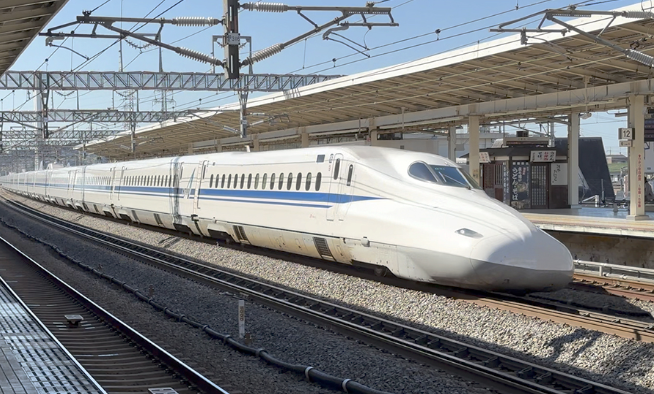
Japanese N700 Series Shinkansen
Environmental biotechnology is created through using living organisms such as bacteria or plants to develop systems that synchronize and help restore the environment. When combining biology and engineering, scientists create infrastructure that prioritizes sustainability, efficiency, and energy conservation. Creating urban cities that focus on preemptive strategies eliminates excessive pollutants released in our environment.
These strategies were implemented into the Shinkansen railway system, the bullet train in Japan. The Shinkansen lines span all across the vast mountainous terrain, reaching islands as far as Honshu (mainland), Kyushu (southern island), and Hokkaido (northern island). With over nine Shinkansen lines, travelers can reach destinations in the most efficient time possible due to the train’s fast acceleration.
The creation of the Shinkansen railway system was designed by a group of researchers from Hokkaido University in Japan. The researchers wanted to create a pathway that would use the least amount of fuel and that had the shortest route to cities across Japan. Developing a train route was difficult because of geographical barriers such as mountains and lakes.
To find the best route possible, the researchers used acellular slime bacterium, Physarum polycephalum, to determine the pathway for the Shinkansen lines. Oat flakes were placed inside of a petri dish, resembling the major cities of Japan. Additionally, bright lights were used to represent geographical barriers such as lakes, rivers, or mountains. After a few hours, the bacteria grew exponentially, consuming the entire dish. The researchers waited until the strongest paths leading to the oat flakes remained. The bacterial routes that remained were the fastest and shortest paths to the destination. The researchers constructed the railway system, optimizing the efficiency of nature to develop the shortest and fuel-conserving pathways.
Atsushi Tero, Science, AAAS
After the construction of the Shinkansen in 1964, the bullet train transported travelers over 320 miles across Japan. Through mountains and valleys, zipping past Mount Fuji, the railway routes allowed the Shinkansen to accelerate up to 285 miles per hour, creating fast and efficient journeys. However, the speed and force required to maintain the train’s constant energy were slowed down while passing through tunnels. As the Shinkansen entered a tunnel at a high speed, the boxy front of the bullet train compressed air inside itself. When the train left the tunnel, it generated a sonic boom, a loud shockwave from the released pressure. The sonic boom disrupted nearby wildlife, towns, and people.
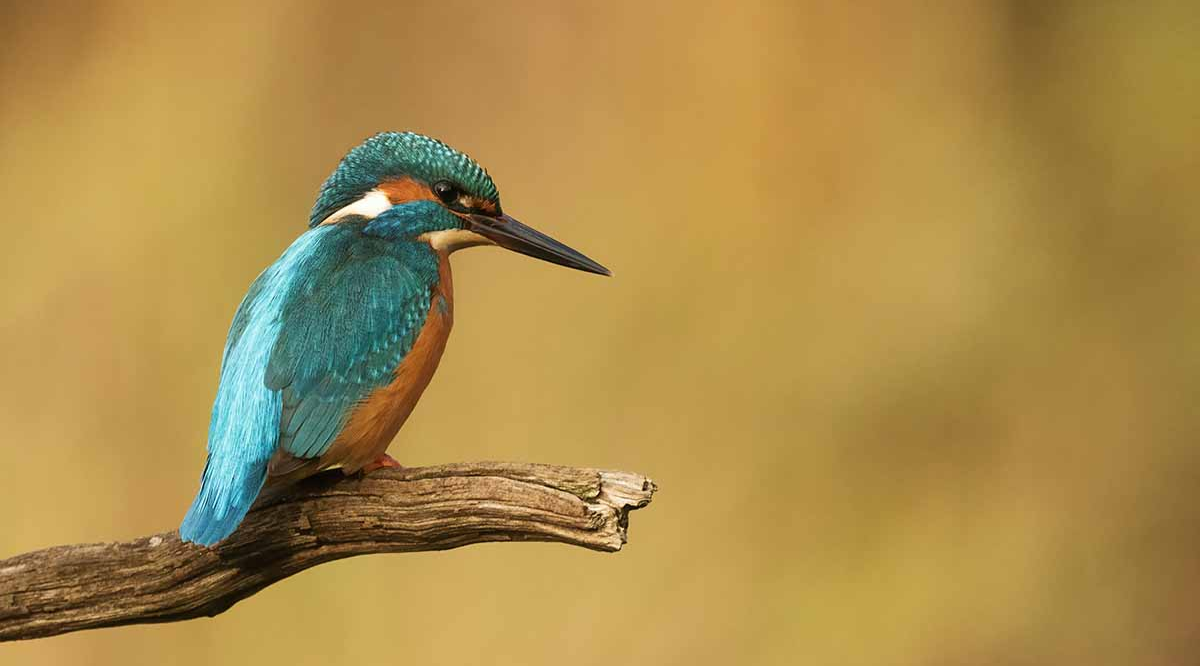
To solve this problem, researchers applied the biological structure of a kingfisher’s beak to eliminate the Shinkansen’s sonic boom. The common kingfisher, a local bird native to Japan, is known for its swift, quiet, and strategic hunting techniques. When the kingfisher dives into water, it produces no sound, whereas a typical bird makes splashes and ripples. The positioning of the kingfisher’s beak is in a triangular shape, allowing the water and pressure to flow around the beak.
Vincent van Zalinge 2015
Eiji Nakatsu, a birdwatcher and engineer, observed the kingfisher, using it for inspiration for the structure of the Shinkansen. By redesigning the front of the bullet train to become narrow like the kingfisher’s beak, it allowed the air within the tunnel to flow around the train. After the implementation of this design, the problem with the sonic boom was resolved. The train was quieter, faster, and used less energy, since it no longer needed more fuel to push compressed air.
These methods for creating transportation are heavily inspired by nature and biology. By using our observations from nature, they can lead to innovative solutions to improve technology for efficiency while benefitting the environment.
References:
“Brainless Slime Mold Grows in Pattern like Tokyo’s Subway System.” Communicating Science
“Shinkansen: Bullet Trains in Japan.” Japan Rail Pass – JRailPass.Com,
https://www.jrailpass.com/shinkansen-bullet-trains
Using a “virtual Slime Mold” to design a subway network less prone to disruption, Phys.org, Jan. 2022 https://phys.org/news/2022-01-virtual-slime-mold-subway-network.html
“Biomimetic Urbanism: Physarum Polycephalum Network Study.” Scripting, https://scripting.molab.eu/tutorials/slime-mold/
“The Shinkansen and the Kingfisher: A Tale of Biomimicry in High-Speed Rail Design.” Biomimicry New Zealand, 2 May 2024 https://biomimicry.org.nz/the-shinkansen-and-the-kingfisher-a-tale-of-biomimicry-in-high-speed-rail-design/
“Tokaido Shinkansen – Don’t Leave Japan without It.” Central Japan Railway Company, https://global.jr-central.co.jp/en/onlinebooking/contents/shinkansen/#about
Leave a comment