
Project Hail Mary Movie Review
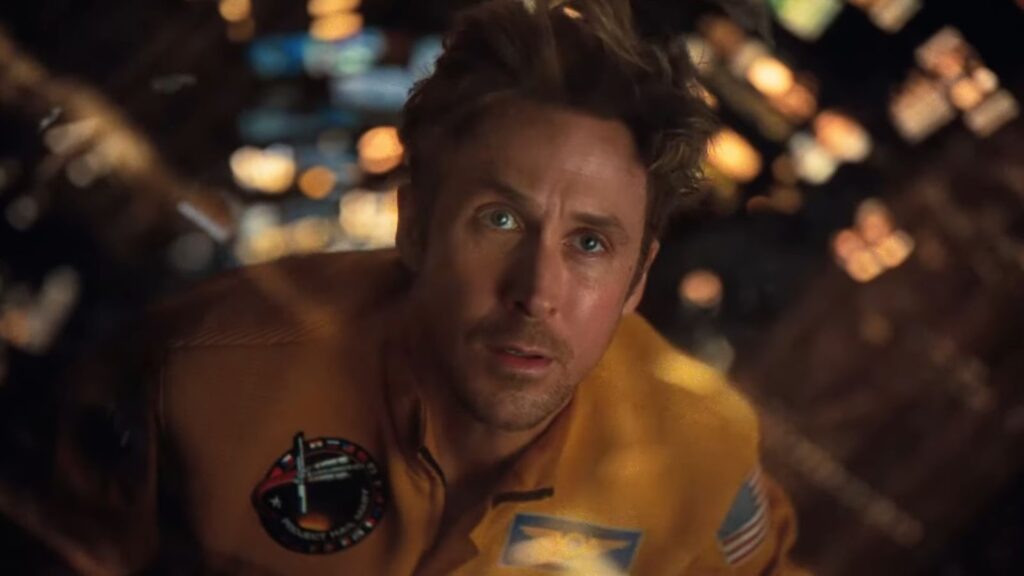
Project Hail Mary, Amazon MGM, 2026.
By: Allison Wallis
Amaze. Amaze. Amaze.
Upon arrival in space, Dr. Ryland Grace, a former middle school science teacher, awakes from a coma with no recollection of who he is, where he is, or why he is in a spaceship. Dr. Grace is tasked with studying astrophage, a microscopic interstellar organism that is consuming the sun’s energy to save Earth. The film, Project Hail Mary, stars Ryan Gosling as Ryland Grace and James Ortiz as the voice of the extraterrestrial creature, Rocky. Project Hail Mary was directed by Phil Lord and Christopher Miller, based on the 2021 science fiction novel written by Andy Weir. The budget for this film was about $200 million. It produced about $300 million in the first 10 days of release. The overall reviews from sources such as rotten tomatoes have gotten over 90%.
The directors and producers did an outstanding job on this film. The details from the novel were on point and were well executed. Project Hail Mary highlights the discovery of finding friends in unknown places. The interstellar alien, Rocky, and Ryland Grace quickly form a deep bond that is not only motivated to save their individual planets, but is also a true connection formed through scientific curiosity and loneliness. The lightheartedness of Rocky and Grace’s friendship creates an optimistic mission that avoids contemplating the heavy weight of determining their world’s future. Both characters admire each other’s capabilities, such as Rocky’s engineering and Grace’s intelligence. Ryland Grace was a perfect selection for Ryan Gosling since he naturally has an humorous and admirable character. Ryan Gosling’s unique personality created many lighthearted scenes that were purely iconic, such as when Grace awoke from his coma, and the many interactions between Rocky and him. Gosling’s experience as an actor wonderfully blends the emotional journey of self-sacrifice and bravery into the story of Project Hail Mary. The character Ryland Grace holds a lot of self-doubt and is unwilling to give up his position on Earth. Ryan Gosling did an outstanding job of portraying Grace’s fear and created a unique connection that reflected human selfishness. The production team captured the raw emotions through creating realistic sets and simulating the science fiction atmosphere. The pacing between humor and the fear of extinction came naturally. The shot was filmed to have a specific tone, but since Gosling’s character is naturally humorous and lighthearted, the humor in many scenes felt natural inside of the film.
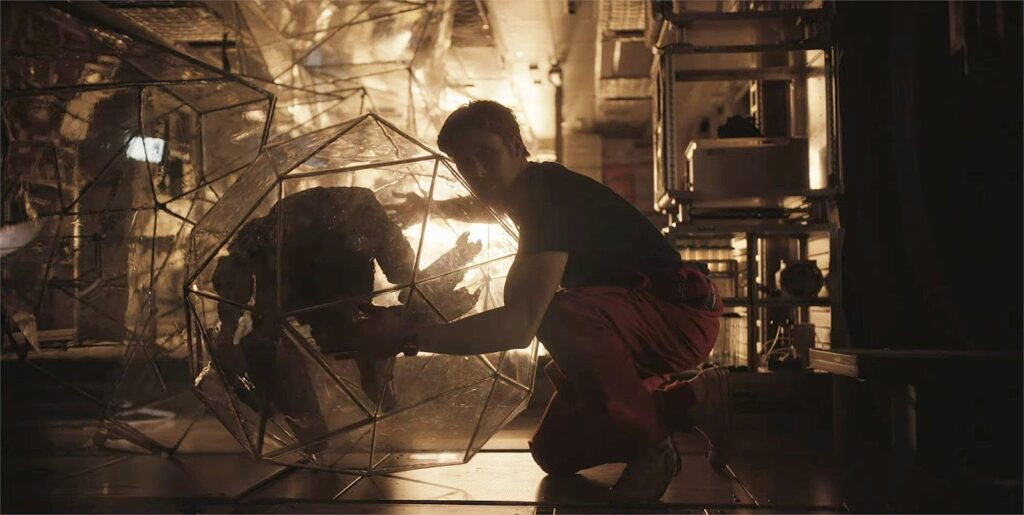
Project Hail Mary, Amazon MGM, 2026.
Additionally, the design for the Hail Mary, Grace’s ship, was intricate and impressive. The physical ship was created for this film so that the acceleration, zero gravity, and centrifuge functions could be as realistic as possible. The production team utilized practical effects and avoided greenscreens when revealing the atmosphere around the spacecraft. However, digital effects were used for lighting to create an interactive atmosphere that could interact with Ryland Grace and the ship.
Aside from the effects, the cinematography was high quality and utilized many shadows and creative lighting techniques. The cinematographer of Project Hail Mary was Greig Fraser, who was also credited in films such as Dune: Part One. Project Hail Mary uses a 70mm format, resulting in greater resolution and visuals that create an immersive cinematic experience compared to the standard 35mm format. The 70mm format is considered to be one of the most challenging formats to film in due to high costs, technology complexity, and difficulty with production. However, the producers did an excellent job with the cinematography and overall visuals. Throughout the film, the rough shadows and high contrasts are utilized in the Hail Mary to capture the isolating sensation and emptiness of floating in space. The lighting also varied throughout the film, contrasting with flashbacks and shots aboard the spacecraft. One of the most interesting shots was the lighting between the tunnel of Rocky’s ship and the Hail Mary. The tunnel was divided by a transparent barrier. The rough exterior of the glass barrier created a lot of unique lighting shots that added depth to the atmosphere.
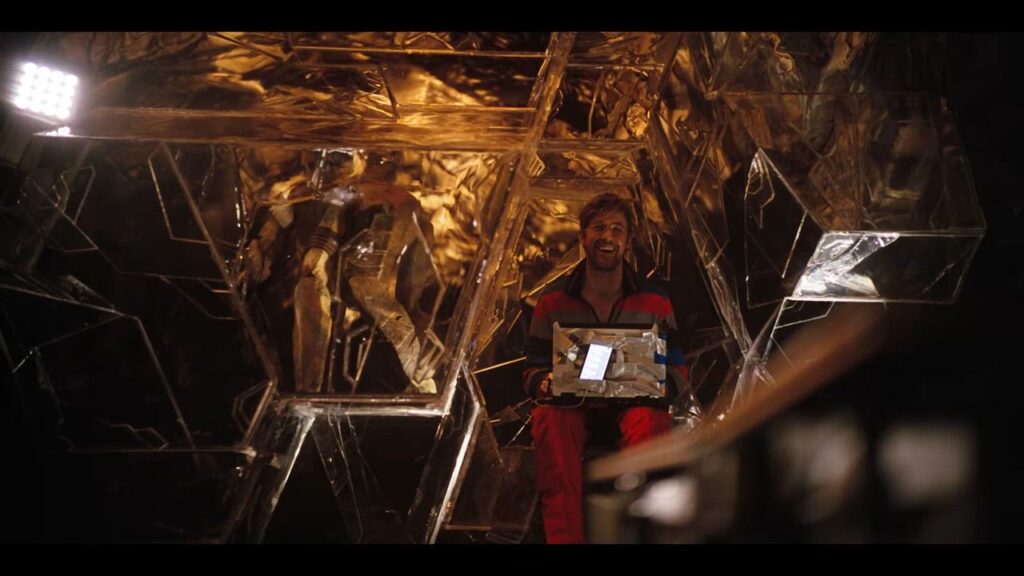
Project Hail Mary, Amazon MGM, 2026.
The overall adaptation from the novel to film was somewhat accurate. The sets and designs were a great representation of the novel and exceeded many expectations. However, the original novel had many elongated scenes and periods of waiting that were cut out from the film. Many of the mathematical concepts and calculations in the novel were omitted or simplified for the film’s pacing and focus on the plot. The film adaptation focuses more on the story rather than going in-depth about some of the details. Project Hail Mary was still a great science fiction adventure film, and the novel is also worthwhile to read.
Credits
Hellerman, Jason, “How Did ‘Project Hail Mary’ Manage To Shoot a Space Movie with NO
Green Screen?” No Film School, 2026. https://nofilmschool.com/project-hail-mary-green-screen
Project Hail Mary. Imbd, 2026. https://www.imdb.com/title/tt12042730/