
Stepping in the Puddles of the Kiwi Pair: Part 2
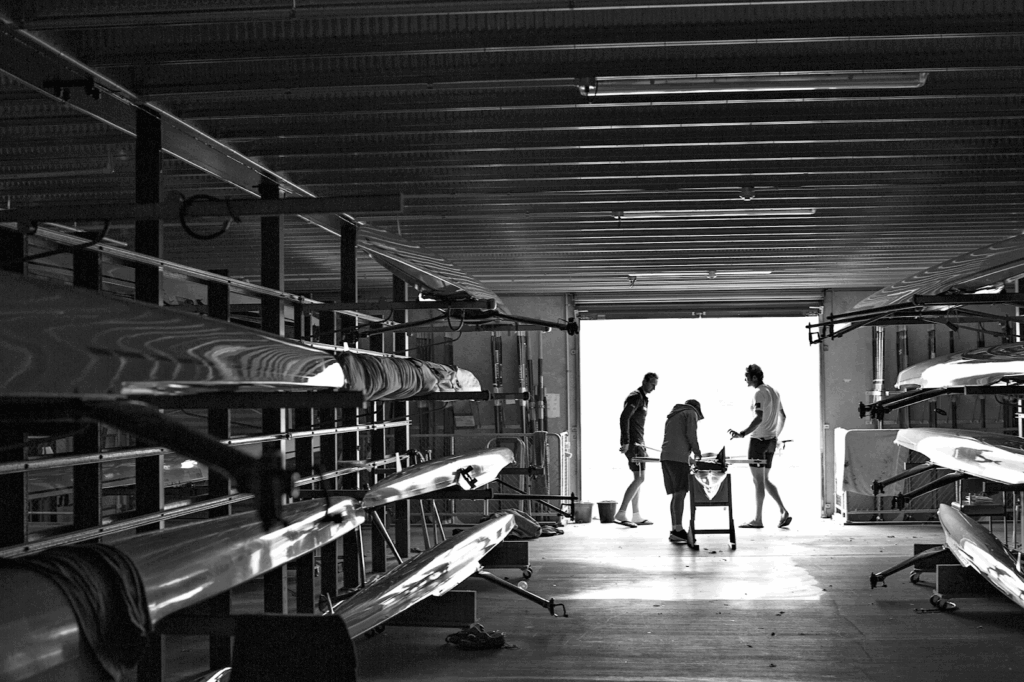
Sourced from https://lottiehedleyphotography.wordpress.com/2016/11/19/the-kiwi-pair/
By: Abinav Atreya
Last article, we explored the early beginnings of what would come to be the legendary Kiwi Pair on their rise to greatness. Today, we’ll find out more about their first races, and huge drama that nearly broke the pair apart.
The Rise of 2009:
“Hungary. Serbia. New Zealand. Netherlands. Great Britain. Czech Republic. Attention. Go.”
The buzzer sounded and the boats roared out of the starting blocks. Immediately out of the start, Great Britain took an early lead, their boat responding to their fast and light strokes. Bond and Murray loaded up, bending the oars as they tried to stay with Andy and Pete. By the 500-meter mark, they were astern of GB by a little over a second; a meaningless margin at this point in the race. New Zealand and Great Britain had opened water over the other crews. It was settling into a brutal race for first.
Through pants and gritted teeth, Murray calmly called for a jump, and the Empacher began to fly. Second to second, they began to gain on the British, their bow slowly inching forward. They got an overlap, and soon they were taking seats every stroke. The boat was really moving now.
By the 1k, NZ was in first by around a canvas, followed closely by GB, both far ahead of the field. Both Bond and Murray knew that the British had a dominating sprint left in them so they needed something in reserve to counter. By 500 meters left, the positions were largely unchanged. Bond described the next few minutes of the race. “Eric called for us to go, and I increased the rate — slowly at first, but with intent. Suddenly we were streaking ahead with open water between our stern and their bow. All I was thinking as we left them behind was that I still had at least another gear to go through, which I could use when the counter-attack came. It never did.” The Kiwi Pair eventually crossed the line 3 seconds ahead of the British. As they said, “In our first international race, we had defeated the favourites.”
There was still racing left. These were only the heats after all, but winning their heat bought them a ticket straight to the final, where World Rowing would get to see if they really were new dominant crew, or just a fluke.
It wasn’t a fluke. Yet again, the Kiwis won by three seconds. Greg Searle, a renowned commentator, exclaimed: “These two were the flagship of the British team, and they have been absolutely taken apart by the New Zealanders.”
Over the next few months, the pair would win at various other regattas, such as the world famous Henley Royal Regatta. They would again win another, albeit close, race at the 2009 world championships, hampered by a rib stress fracture that Bond suffered a few weeks before. The pair was now cemented as the crew to beat.
Cracks and Grout:
Coming into 2010, the pair would now have to repeat their success. Both of them made it past trials, but this year was shaping up to be a long one. The world championships were placed for november, almost 3 months later than normally expected, and to add on, the NZ squad had nearly lost a member; Mahe Drysdale, future 2 time olympic champion, had completely injured his back during training, not even able to stand up. But Tonks didn’t change his methods. From Eric Murray, “He simply upped the training load for the rest of us. If the 2009 season had been a mental battle, this year was straight-out torture.”
Tonks had also instituted a new weights program to develop power, but after Bond again started suffering with injuries, he completely removed it, hypocritically stating that the weights program was completely useless. His distant style of coaching had begun to grow some cracks between him and his crews.
The grueling program had effectively transformed the scenic lake into an office. Landmarks were not remembered for their beauty, but as distance marks. Sounds and words blurred together for hours each day, even as crews descended on the lake for the oncoming championships. From Bond, “The training workload had showed no signs of abating, and compounding everything was the growing weariness from three months abroad, living out of gear bags and in each other’s pockets. I was still young, just 23, and raw enough to still believe in the unwavering authority of the coach, but I was tired of Dick’s lack of feedback. I felt as if I was on some Sisyphean quest to earn his respect. Being injured only made me feel worse.” In Dick Tonks’s eyes, the constant determination and drive to do better was not commendable, but merely expected. The journey to medals was as tiring as the journey to finally earn Tonks’s respect.
As the 2010 World Championships drew up, Tonks had become even more guarded. The team had moved farther up the lake, to stay away from the eyes of the international crews. It was a huge occasion in New Zealand, being the first time since 1978 that they had hosted the world championships. Against Tonks’s wishes, the crews got swept up by excitement and fans.
The heats and semifinals started and progressed, and the boats lined up for the final. The women’s pair had just finished, and the roar of the crowd could be heard all the way up the course. The nerves quickly were forgotten as the buzzer rang and the boats ran out. Again, GB held the early lead, and the Kiwis settled into their unbeatable rhythm. But this time, they didn’t begin moving. GB stayed in front. “We remained calm, trusting that sooner or later we would be able to break them, but it just wasn’t happening. I quickly looked over my left shoulder, hoping they were slipping back. I could hear the crowd in full voice at the finish line, urging us on.” 500 meters remained, and the wall of noise made it impossible to communicate anything. With 150 meters left, not even 30 seconds, they dug deep. Vision turned into tunnels, then to black. The noise fervently mixed with the red-hot blades in their legs, the fiery chasm in their lungs barely able to function. And then it was over.
They had, again, crossed the line first. But just barely in time. Only 3 tenths of a second separated the two crews. Bond said, “If Andy and Pete had had one more stroke before the line, we would have been second.” Even with injuries and painful silence from Tonks, the crew had managed to fill the cracks that had formed with the grout of consistency and grit. But even grout eventually breaks.
Moving away from Tonks:
“Sometime just after Christmas, I [Hamish Bond] received an email from a friend containing a link to an audio recording made by the great Australian oarsman Drew Ginn. Drew, the three-time Olympic gold medallist, having won his first in 1996 with the ‘Oarsome Foursome’ before going back-to-back in the pair in 2004 and 2008, was the archetypal rowing soul man, a deep thinker and a regular contributor to rowing conversations through his blog, Rudderfish. I clicked on the link and listened, and was instantly and absolutely transfixed by what he was saying. He was describing — in the language of a rower, not a coach — the exact same feeling I had been trying to articulate for my entire career. What he was explaining, simply put, was how to make a boat go fast…Fundamentally I was finding, and had found for many years, a resounding conflict in what was being taught and what I had experienced.” Bond later played this recording to Murray, who was similarly eager to try it out. The two had, in their words, taken back some of their training from Tonks. The boat felt good, but they began to shut out Tonk’s instructions. This would all come to a head soon.
“Eric didn’t miss many sessions, but on one particular weekend he took a Saturday morning off to escort Jackie [Murray’s wife] to an equestrian event in Hawke’s Bay.” A somewhat common occurrence, Murray would take a day or so off every now and then, mainly to attend to family matters. Bond, who by accounts was a very consistent man, didn’t like these interruptions. But he understood Murray’s situation, saying that “He operated at the intersection of real life and rowing, which was an uncomfortable place to be. I didn’t have that to worry about it; my life was training and racing.”
Considering that Murray had done it before, he decided to ask Tonks if he could spend a weekend with his wife, Lizzie, before any important events. To both of their surprises, Tonks did not like the suggestion at all, even after numerous attempts by Bond to convince him that he would still train.
Later in the evening, Bond and Murray received a message from New Zealand’s High Performance Operations Manager, Lisa Holton. Tonks wanted an appointment with the crew.
The following minutes would change their perspective on Dick Tonks forever.
As they dutifully sat down, Tonks rammed through the door and unleashed a vast swarm of swears on them. Bond remembered, “He thundered at us — not waiting for an answer, but proceeding to list all of the things he did for us, the whole time seasoning that list with a liberal sprinkling of spicy vernacular. My jaw was on the floor. I had never been spoken to like this in my life, by anyone. Even if I had wanted to, I was too stunned to speak. And what on earth do you say in response to something like that anyway?”
He finished his outburst and left the room. Murray, Bond, and Alan Cotter (the high performance director) sat in silence, as Tonks again turned back to the room and released another load of swears and insults. “I could never see him in the same light again. I had sweated blood for that man, done everything I had been asked to do, just to milk one measly drop of praise out of him — praise that, apart from a brief, congratulatory remark after winning finals, was never once forthcoming. All I could think was that if he wanted to treat me like that, he was nothing to me.”
The next day, the pair consulted Rob Waddell; another New Zealand rower coached by Dick Tonks. He advised them to take the training program and ignore the rest. While Tonks would still administer the training plan, the Kiwi Pair now essentially worked on their own. While a setback, this independence eventually allowed them to become what they’re remembered as today. A constant drive and feeling of the boat that would lead them to the rest of their gold medals to come.