
A Walk with the Maasai
Sarah Gold via Micato Safaris
By: Jasmin Sangha
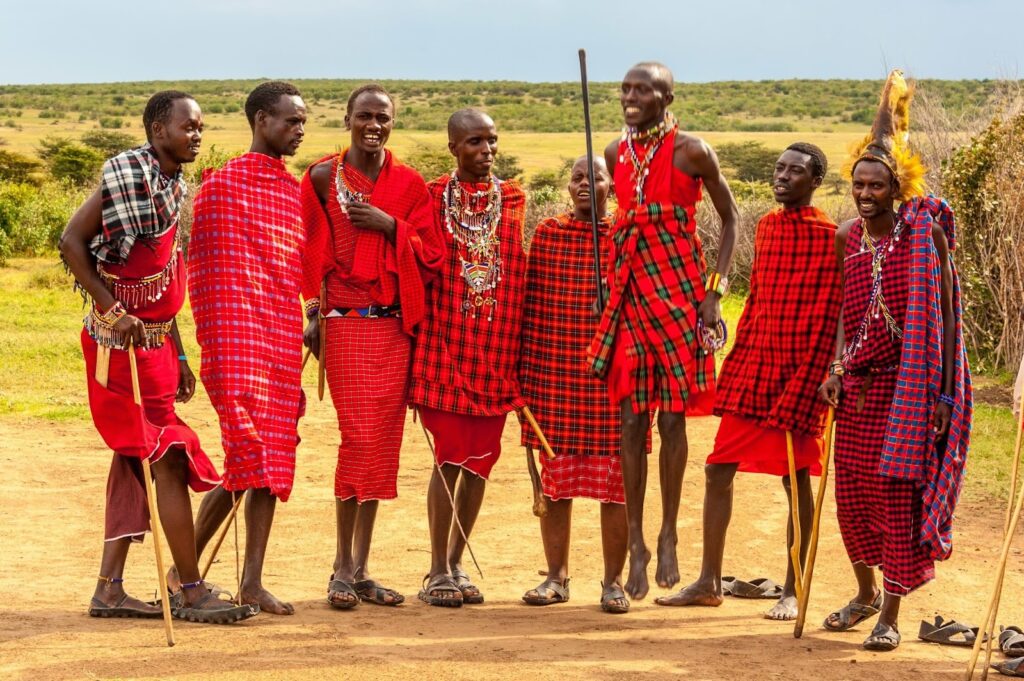
The Maasai people of Africa make up a large portion of southern Kenya and spill over the border into northern Tanzania as well. Their distinct culture, beliefs, and way of life add to the uniqueness of the people group. I was fortunate enough to meet one tribe on my trip to Africa and it was an unforgettable experience.
Origin of the Maasai:
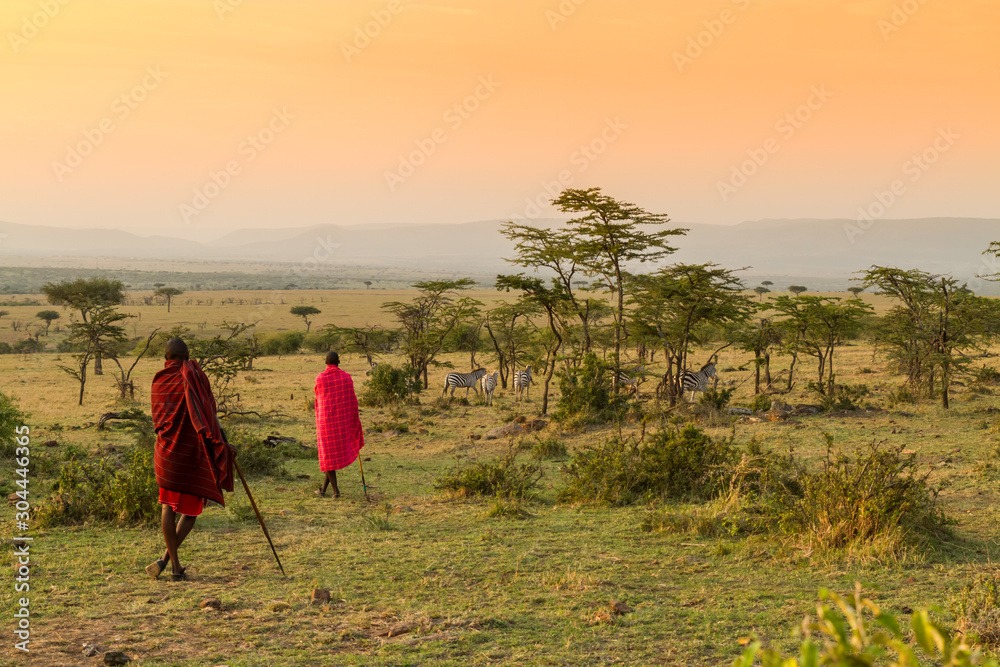
The tale of the people’s origin is shared through the tribe’s oral history. The Maasai tribe originated north of Lake Turka in the lower Nile Valley. They began moving south in the fifteenth century and settled in parts of northern Kenya and central Tanzania. Their land reached its greatest size in the nineteenth century, covering a large portion of the Great Rift Valley. During this time, the community survived by becoming talented fighters and powerful cattle raiders, known for throwing clubs, or orinkas, about 100 meters. In 1852, they moved into Kenya and became the southernmost Nilotic-speaking group. However, from 1882 to 1902, the Maasai faced a dark time known as the Eumutai, when disease, drought, and famine killed most of the livestock. Later, treaties in 1904 and 1911 minimized the land they had control over in Kenya, and in the 1940s, lost even more land in Tanzania. Despite the hardships they endured, the Maasai have fought to protect their traditions and live mostly in the Maasai Mara region.
roca83 via Adobe Stock
My Experience with the Maasai:
As we traveled down the dirt road and left a small Kenyan town behind, our tour guide pulled over on the side of the road. Once we got out of the car, I saw a man in a bright red shuka (traditional cloth wrapped around the body) and beaded jewelry coming towards us. He welcomed us and introduced himself as the elder, or chief of that specific Maasai tribe. He explained that he was the chief of seven different Maasai villages in the area. As he spoke, about ten other men in red shukas approached us. He told us they wanted to perform a traditional welcome dance to invite us into their village.
The ten men stood in a line in front of us and began chanting. The music was heavily dependent on each person’s vocals and a horn was also played during the dance. The horn is usually used for the Eunoto, or coming of age ceremonies. Three women also joined into the dance and chanted in response to the men’s call. After chanting in a line for a couple of minutes, one of the younger men stepped forward and began jumping up as high as he could. After jumping a couple times, he went back in line and another young man stepped forward and did the same. The process repeated until all the young men were finished jumping. Then they invited us to come forward and walk slowly into their village while still chanting and blowing their horn.
As I walked, I noticed about twelve mud Inkajijiks, or houses, in a circle, leaving an open space in the middle of the village. The chief began explaining the ideas and traditions of the Maasai. Young men jump as high as they can to prove their strength and attract future wives. He told us that the higher you jump, the more wives you’ll get.
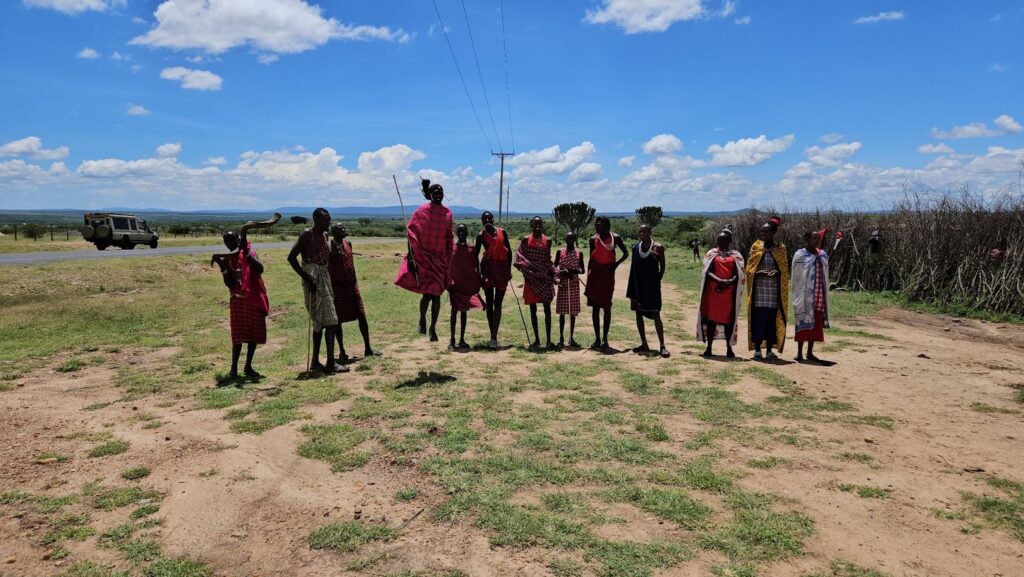
Image by Jasmin
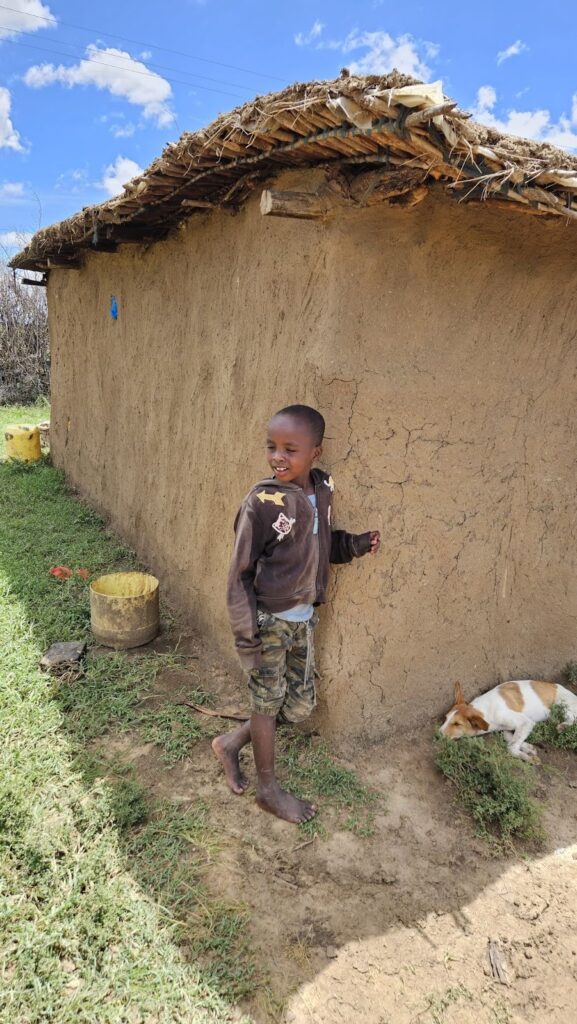
Image by Jasmin
To continue, the chief explained that the main languages spoken are Swahili and Maa, and that children learn English when they start school. The Maasai is a patriarchal society with male chiefs of the village making most decisions for the entire tribe. Men can marry multiple times but they have to have a separate Inkajijik for every wife. He told us he has two wives in the village we were in. Since they were originally cattle raiders and soldiers, he explained that men still had the role of defending the village and taking care of the cattle. Their main source of food is cattle and they also drink cows’ blood starting at a young age. Women are expected to cook and clean in the small houses and take care of the children.
Another important part of Maasai culture involves young boys proving their strength and maturity. The chief spoke about how a group of ten boys go out into the wilderness for three months and learn to survive on their own. At the end of the three months, they must kill a lion to prove they are ready to step into adulthood. However, due to the decreasing lion population, the governments have illegalized this tradition. Since many men are extremely traditional in the villages, the chief explained how it’s hard for him to convince everyone to stop even though it’s against the law. Alternatives such as killing a goat or livestock for this tradition have been suggested but nothing has been agreed upon yet.
This experience was eye-opening. I never recognized how different societies and cultures were until I stepped out into the world and witnessed traditions first-hand. I thought it was important to cover the Maasai culture while recognizing how different their society is to Western society. Overall, I had a great experience and learned so much with the Maasai.
References
Maasai Tribe – Maasai History, Clothing, Culture – Kenya. (n.d.). Siyabona Africa. Retrieved October 4, 2025, from https://www.siyabona.com/maasai-tribe-east-africa.html