
Learn, Laugh, Farm On
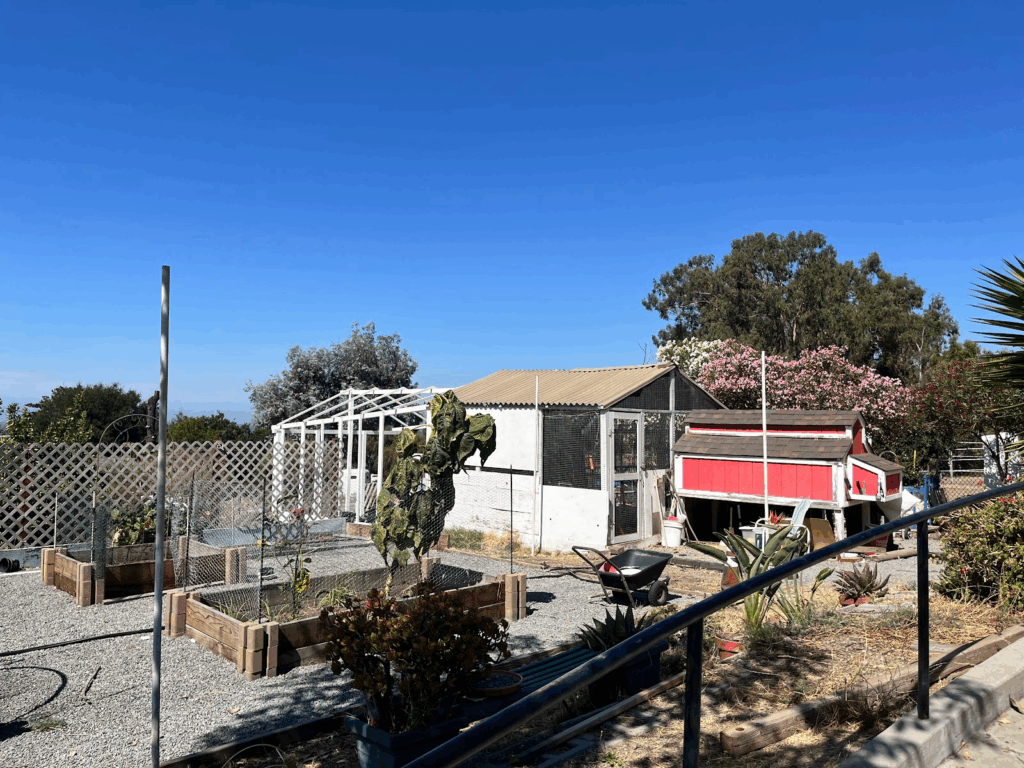
The Farmhouse at the Alsion Montessori Middle-High has a short but rich history of cultivating mindsets as well as fresh produce. It fosters a community of nature loving students and also helps each and every kid to learn responsibility, perseverance and gives strength to explore new things, even if they seem scary. Finally, there is the heart and soul of the operation: Ms. Mimi, she has been there from the beginning and will continue helping students grow into their full potential.
Built in 2010, the Farmhouse started out as a 4×4 inch garden box and a huge field of weeds which Ms. Mimi (the school’s garden caretaker) built into a small garden and as time went on added a chicken coop, cleared out some of the weeds and made the garden even bigger. The Farmhouse was originally run by volunteers for the first few years, and after it got bigger, the teachers started making it a requirement for the middle school volunteers to contribute to the farm. They don’t love their job, but Ms. Mimi makes sure that they all have a choice on what they do and how they want to contribute to the farm. She has put a lot of effort into the farm over the years, from clearing out the weeds and planting in new crops to teaching the children how to do so as well.
Interview with Ms. Mimi
Haasi: Who collects the chicken eggs and what does the process of taking care of the chickens look like?
Ms. Mimi: The process is attempting to keep their coop somewhat clean. There’s no perfect way to do that with 14 chickens pooing every day, but we try our best. We give them three kinds of food, they have medicated food while the peacocks live with them. It’s very mildly medicated, just enough to keep them from getting sick. One of the kids on the chicken crew collects [the eggs], takes them up, cleans them, puts them away in the fridge for sale. Another kid does the food and right now that is Liv. And right now, it’s Om and Lev that collect the eggs. Kristen, she takes care of making sure they have really clean water every day, which is super important. And then we all kind of tidy up down there once we’ve all done our individual jobs, and that’s how that goes. And I supervise a lot. I usually end up covering for anyone who isn’t here that day.
Haasi: How often do you see rattlesnakes on campus?
Ms. Mimi: Three to five times a year. We are in their backyard. It’s true. I mean, we built a house in the snake’s backyard. They belong here, they’re fine. And we don’t like killing them at all. But even if he leaves he’s going to keep coming back—there’s mice in the coop. And when he’s in the coop, if somebody goes in the coop and they wouldn’t know if the snake was there because of all the hay, then they would get bit. So we had to kill it. But in general, if we can encourage any wild animal to leave, that’s what we do.
Haasi: How involved would you say the students at Alsion are when it comes to taking care of the farm?
Ms.Mimi: The whole student body, no. But the kids that are into it are into it. And it seems like half the chicken crew kids are also in the gardening club, which is Friday afternoons. And it goes hand in hand. It does. We grow stuff, we even grow food for the chickens. So they have fresh vegetables.
Haasi: Is the chicken crew mandatory?
Ms. Mimi: Of all the environment jobs that are in middle school, that’s the only one we will not force you on. Every single job here, every session, everybody switches jobs, but the chicken crew stays by choice. If they want out of the chicken crew, they don’t have to stay, ’cause it’s kind of a nasty job. Sometimes it’s fine and fun, but other times there’s poo and muck and yikes! It can be just gross. Or you walk in and have a dead peacock. We had that happen right before school. The week after school started, there was a dead peacock. It was a bummer, and the job could be nasty sometimes.
Haasi: What types of vegetation plants do you guys grow here? Does it change per season?
Ms. Mimi: It changes per season. We generally have strawberries and rainbow Swiss chard growing, because chickens love Swiss chard, and we can also use it in our salad. At this point, we have potatoes growing, we have basil growing. We have some boring Anaheim peppers that aren’t hot at all. And three kinds of tomatoes. We pulled out the sweet peas and we put in snow peas, which is a winter crop or a late fall crop. And we’re also going to plant a bunch of cilantro because this is the right time of year to plant it. And then I’m gonna wait a couple weeks and give the kids a list of the winter crops and let them pick three of them, and we’ll grow those.
Haasi: This is more of a fun question. Do you guys name your animals, and if so, what are their names? Any way to identify who is who?
Ms. Mimi: Jack Jr. is the rooster and he’s always Jack Jr. And Mrs. Davies is always Mrs. Davies, but for the rest of them, a certain group of kids will come in and really care, and they’ll name these chickens whatever they name. Like Mrs. Brown is generally Mrs. Brown. She’s the only brown chicken. But in general, they all rename them. I don’t care. For the peacocks they only have one name each and they are set. Harold and Nerium. I’m not really insistent. You know, if that makes you happy to rename it, then it’s fine. I don’t really care too much about that.
Haasi: What’s your favorite part of taking care of the farm, the whole experience, the whole job, I guess?
Ms. Mimi: Well, part of it is personal, as much as I love the earth. I love dirt, I love gardening. I think putting your hands in the soil is just so good for your soul. You can get rid of so much stress when gardening. But I also love seeing a kid who just literally refused to touch dirt and then finally getting them to take their gloves off and put their hands in the dirt, and then six months later, they preach, “No, the dirt is good for it. You’re getting minerals and stuff right out of the soil. It’s so good for you.” Last year, they went around complaining “I don’t like zucchini, I don’t like zucchini” and I didn’t like zucchini when I was your age either, but let’s go cook something. And we came up and we cooked zucchini fritters. They loved it. And they asked “Can we cook those again?” I really enjoy turning kids on to vegetables they just don’t want to eat. That’s always fun.
Haasi: So you guys make dishes out of the produce? What kind of dishes?
Ms. Mimi: I already have a plan for what’s going on down in that garden. We’re gonna make potato soup and we’re gonna make basil, which we’ll probably throw on pasta. That’s all we have to go there right now. Maybe some roasted potatoes in the afternoon. I haven’t decided, but, you know, we’ve got some things planned.
Haasi: Do you have any future plans for the garden?
Ms. Mimi: The garden was just produced, and this is its first year functioning. This is a whole new garden. It used to be just a weed hole down there with, like, some funky boxes. And I spent like six months with some help. But it looks good, and there’s gonna be a peacock coop soon. I am pretty pumped about that.
Haasi: How do you think this helps a student grow as a person?
Ms. Mimi: You know, my favorite thing about the garden is that initially, I’m saying, “you need to do this or you need to do that.” And they kind of do it but, they’re not loving it. And I tell them, I was forced to garden at your age. I hated it. But now I love it, and part of the reason is seeing someone take joy in nature, that just makes my day. Plus, they’re learning responsibilities. It’s one thing to go, “I didn’t finish that chore,” but if you don’t finish the chore at a chicken coop, the chicken dies. You can’t not do it. And they do it willingly and happily, and that is nice to see. It really does help them grow, it does, it teaches responsibility for life, even plants are life. You have to water the plants, or they’re gonna die. And then if they die we’re not going to eat. That’s my whole motto. The truth of all gardening is that for me. I was still a teenager, but older, and I remember thinking, “Well, I’m never going to starve to death. I’m always going to be able to grow food.” And that’s a nice feeling, like, no matter what happens, just give me some dirt, and I’ll be eating.
Haasi: How would you like to end this interview? Any last words?
Ms. Mimi: Well, I would say that I love this school. I love these kids. I love everything about this place. I love the property. I think there’s something in the land itself that gives peace and calm, and I feel really lucky to be here. And I’m always feeling lucky to have this job and be around all these great people. And I mean that. I love everybody here.