In the Interest of Ideologies
(Image Credit: Good Studio via Adobe Stock)
By: Aashi Mehrotra
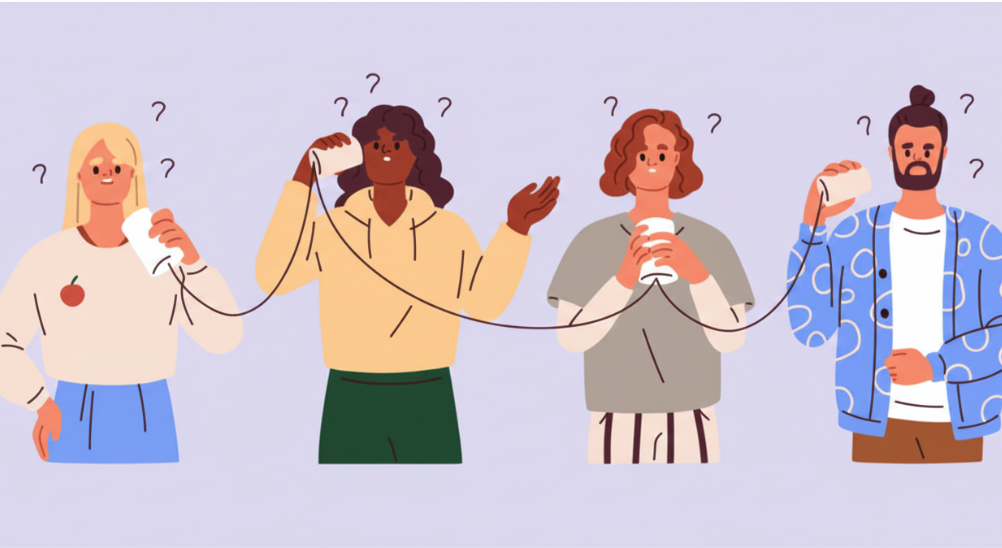
Social Media plays a fast-paced game of telephone with political terminology to the point where definitions have gotten lost in translation. So what are the modern definitions of ideologies within the left-leaning movement?
In a time when news and opinions—in the form of headlines, theories, and buzzwords—run rampant on social media, it has become rare for an idea to retain its original meaning after circulating the internet. Content creators, in an effort to be taken seriously, have begun using official medical terms, eloquent vocabulary, political labels, and academic titles when supporting their opinions. On the surface, this adoption of more sophisticated language should be applauded and encouraged, especially with the concerning rise of anti-intellectualism in this country. However, this approach to dealing with influencer etymology severely underestimates the FOMO (fear of missing out) that creators often feel when trends take off without their participation. Suddenly, what started as an interesting position on a specific situation faced by one content creator becomes a twisted social commentary on parts of society the original take was never meant to interact with. Multiple creators attempt to copy lingo and extrapolate intention in the hopes of reaching virality. Ideas get thrown around as trends, become diluted, misconstrued, and solidified as ten separate philosophies.
Political news, for example, is no stranger to this effect. Views on current events are shared by thousands in the form of videos, comments, and memes. The abundance of content relating to a topic means a variety of perspectives must now interact. As humans, we have this almost intrinsic desire to be right and have others understand or agree with us. Consequently, when it comes to online debates and internet opinions, individuals will attempt to make their side all the more compelling and “correct” by usage of political terminology. Sadly, many misinterpret and twist political labels away from their actual meaning. For example, when attacking a socialist political figure, many critics might attempt to call them a communist to portray them as an enemy of the country. Over time, the definition of communism changes and grows to include the socialist politician’s values as they become widely accepted under that term. The negative connotation of communism, especially in Western countries, demeans the original values held by the political figure and rewrites their intentions.
Additionally, the internet’s infamous tendency to incessantly characterize and force labels upon various subjects enables the use of incorrect political terminology among online users. This ceaseless characterization often forgoes accuracy in its affected urgency. We, as consumers of short-form content, actively define and simplify the details of content creators’ complicated situations in an effort to make them digestible. Being introduced to so much information in such a short time forces consumers to manipulate information into individual perceived truths without nuance. Because of this, social media’s quick news cycles can be described as a great big game of telephone, where the idea is changed one word at a time until it is no longer recognizable in pop culture as the original definition in academia. In other words, one individual’s perceived truth is passed around into distortion.
In current political conversations, there is a big disconnect between all participants regarding the meaning of each political label, its values, and who fits under that philosophy.
People who identify with a more specific ideology on the left-leaning side get bundled up in more broad and general labels, much like the game of telephone. So what are the modern definitions of ideologies within the left-leaning movement?
RING RING: The word is communist.
Let’s start with the furthest left. Communism seeks a stateless, classless society where all property is owned collectively, and there are no economic hierarchies. In theory, it eliminates poverty and inequality. In practice, communism often takes the form of a highly centralized state that controls industry during the transition. Karl Marx and Friedrich Engels first popularized this philosophy in The Communist Manifesto. Historical examples include the soviet union (intheroy), Maoist China, and modern-day Cuba.
Core Beliefs:
- The end of capitalism and private ownership
- Abolition of class distinctions
- Production organized “from each according to his ability, to each according to his need”
Misconceptions:
- Many assume communism means authoritarian dictatorship — but that was Marx’s transitionary state, not the end goal. Online, “communist” is often used as a blanket insult for any far-left view, which waters down its actual meaning.
RING RING: Hmm…That sounds like socialism.
Not necessarily. Socialism is a broader philosophy advocating for collective or public ownership of key industries and a reduction of wealth inequality. Socialists still value democracy but believe capitalism is inherently exploitative. Socialism doesn’t always mean total state control — it can also mean worker cooperatives or decentralized economic planning. Modern European parties like Spain’s PSOE or Britain’s Labour Party (left wing) embrace forms of socialism. Bernie Sanders frequently identifies as a democratic socialist but supports many socialist-leaning policies. A new socialist recently gaining fame for success in the New York Mayoral democratic primary is Zohran Mamdani.
Core Beliefs:
- High taxation of the wealthy
- Strong welfare state (universal healthcare, housing, education)
- Workers should control production more directly (co-ops, state ownership)
Misconceptions:
- Socialism and communism are not the same thing. Socialist may still believe in democracy, elections, and some market activity—communism seeks a stateless system.
RING RING: Wait, is that not Democratic Socialism?
This is a blend of socialism and democracy. Democratic socialism mixes socialist economics with democratic political structures. Democratic socialism supports free elections, civil rights, and liberties, but aims to replace much of capitalism with a system where production benefits everyone, not just private owners. It’s more radical than a social democracy, which keeps capitalism but heavily regulates it. Scandinavian countries are often mistakenly labeled “democratic socialist,” but they are actually social democracies.
Core Beliefs:
- Free and Fair elections
- Social ownership of major industries (healthcare, energy, transportation)
- Strong social safety nets and redistribution to eliminate poverty
Misconceptions:
- Many people think it just means “big government,” — but the key is economic democracy (workers having control).
RING RING: Great! So we all believe in Social Democracy.
Not exactly. Social democracy is more moderate: it seeks to reform capitalism rather than replace it. Think universal healthcare, affordable education, strong unions, and social safety nets — but still a market economy. For example, Sweden, Norway, and Finland have strong welfare states, high taxes, and high social mobility, but they still have thriving markets and private businesses.
Core Beliefs:
- Capitalism is fine, as long as it is fair
- Universal healthcare, education, and retirement systems
- Strong unions and protection for workers
Misconceptions: People confuse this with socialism, but social democracy doesn’t abolish private property.
RING RING: We’re all Neoliberals here?
Neoliberalism is often confused with liberalism itself. Neoliberals support market-based solutions, globalization, free trade, and limited but strategic government intervention. They’re socially liberal but economically pro-market. This was the dominant ideology of figures such as Bill Clinton and Barack Obama. Critics on the left argue that neoliberalism prioritizes corporations and wealth accumulation over ordinary people.
Core Beliefs:
- Privatization of government-run industries
- Free trade, deregulation, and fiscal restraint
- Market-based solutions to social problems
Misconception: Online, “neoliberal” has become an insult meaning “corporate sellout,” but it’s more accurately a belief that markets are the most efficient way to deliver prosperity. Neoliberals are not necessarily anti-social programs, but they simply favour private-sector involvement and incremental reform rather than radical change.
RING RING: Did you say you’re a Liberal?
Modern liberalism in the U.S. means center-left — supporting democracy, civil rights, and moderate government intervention to correct market failures. Liberals value gradual reform and compromise rather than revolution.
Core Beliefs:
- Protecting individual rights (free speech, voting rights, women’s rights, equality)
- Mixed economy with regulations to fight monopolies
- Gradual reform rather than revolution
Misconceptions: In global politics, “liberal” can mean something closer to “classical liberal,” which is being economically right-wing and pro-free market. In the U.S., it is synonymous with “socially progressive.”
RING RING: I guess we’re all Progressive.
Progressivism is even broader than liberalism, focusing on social reform and justice: civil rights, environmental protection, gender equality, and systemic change to make society fairer. Progressives often overlap with liberals but push for stronger regulations and wealth redistribution.
Core Beliefs:
- Address systemic issues: racism, sexism, climate change
- Strong government regulations and higher taxes on the wealthy
- Expansive social programs to protect marginalized groups
Misconceptions: Some people think “progressive” means “radical,” but most progressives work entirely within the system, they just push harder for change than liberals do.
RING RING: The word was Leftist…right?
Finally, we get to the catch-all term. A leftist is anyone who identifies with the left beyond moderate liberalism — usually including progressives, socialists, democratic socialists, and sometimes even anarchists. The term has become a substitute online for “anti-right-wing,” but its true meaning is broader: leftists want to structurally change society, not just tweak it.
Core Beliefs:
- Structural change rather than minor reform
- Redistribution of wealth and power
- Either strong centralized control or radical decentralization
Misconceptions: “Leftist” online is often used by the right/conservatives to mean “anyone I disagree with,” or a synonym for “liberal,” even though liberals can be moderate or even center-right on economic issues.
In a time where online debates devolve nuance into trending buzzwords and attempts at virality, taking the time to properly define political ideologies is more important than ever. Each label—whether progressive, liberal, socialist, or communist– carries a distinct history and set of values that deserve to be understood on its own terms. By defining these terms, we can finally put the telephone down and hear each other clearly.