
Birdwatching Basics: A Guide to Observation and Identification
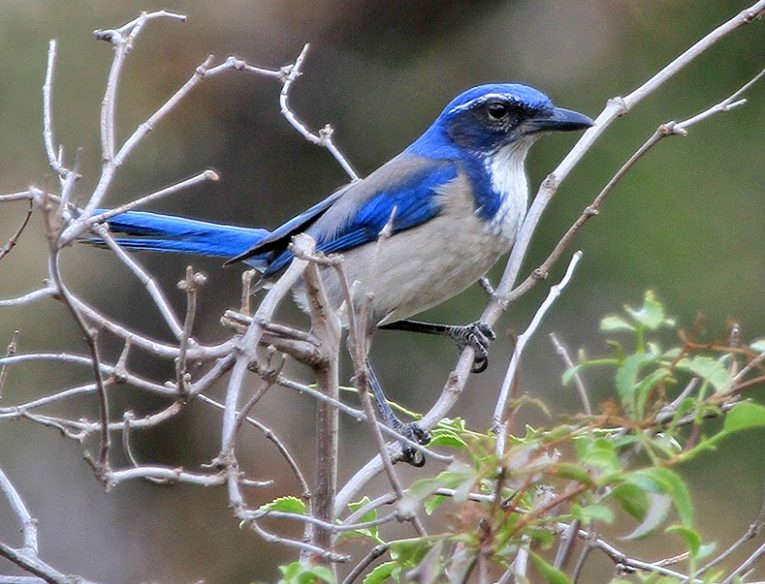
(Image Credit: Alex Viduetsky/sfvaudubon.org, image of a California Scrub Jay)
By: Amber Wallis
California contains a vast range of ecosystems, making it one of the most diverse places in the world. Environments from lush redwood forests, towering rock formations, barren deserts, and frigid oceans, including rocky tidepools, contribute to California’s ecological diversity. These ecosystems are home to 600+ bird species in California, which is ⅔ of North America’s bird species. The diversity of birds is what makes California a hotspot for birdwatching, and whether you’re in a town or rural area, there are unique species all over.
Birdwatching is simple; anyone can set up a bird feeder or walk around and observe birds. However, identification is much harder as various species may share characteristics or appear like one another. Equipment such as binoculars is handy when exploring new areas, as birds are often camouflaged in the trees or soaring far away in the sky. Differences in habitat and behaviour can help identify birds, and with a variety of tools, bird identification is more straightforward. Binoculars like Zeiss Terra ED 8×42, Celestron TrailSeeker ED 8×42, and Bushnell Prime 8×42 are common among birdwatchers. (There are also some helpful links regarding the different binoculars at the end of this article). Binoculars often vary in their ability to zoom in, clarity, and brightness. They all have different qualities, and depending on your preference, one may suit you more than another. Prices of binoculars range from $100- $ 2000+. Any type of binocular will benefit your birdwatching experience and will make identification easier.
When identifying birds, it’s important to note their specific characteristics. Some may be larger in size, have different beak shapes, different feather colors, or vary in wingspan. These characteristics help birds adapt to their environment and ensure they have the best chance of survival. For example, a pelican would have a larger beak to catch more fish in the water, while a sparrow would have a smaller beak to peck seeds or berries in a forest. Because of this, birds also exhibit specific behaviors that distinguish them from others; thus, observing how birds eat, fly, or nest can narrow down the options when correctly identifying them. Observation is the key to bird watching, and even if the names are difficult to remember, spotting little differences develops a better understanding of birds.
Some helpful resources for bird identification are online apps like Merlin or eBird. Merlin was made by the Cornell Lab of Ornithology in 2014, while eBird was also made by Cornell in 2002. These apps contain maps with local birds in the area, and users can upload photos or record audio. They can also easily identify the birds in your area and provide relevant information about their behavioral patterns. In Merlin, users can upload photos of birds and use their location to identify them, or answer step-by-step questions about the bird characteristics to narrow down possible bird species being observed. Despite these benefits, online identification apps still can misidentify birds, so it’s important to match their given information with traits you can see. Another unique feature of Merlin allows birdwatchers to record audio. The app will identify the calls of birds and match them with the information in Merlin’s data bank. This feature is extremely helpful in situations where the bird is not visible but can still be identified just by hearing its call. On the other hand, eBird is used less for identification and more for creating lists of birds seen during hikes or trips. This helps birdwatchers keep a record of their life lists and track which birds they have seen in certain locations. Users can see other birdwatchers’ reported lists if shared, and can use this to locate birds seen recently. With more lists made, scientists can use these observations to clarify which species are migrating or staying in a certain location. Resources online have made bird identification easier for everyone and help birdwatchers build a strong foundation for understanding these animals.
As mentioned before, apps like Merlin rely on appearance and sound to properly identify birds. However, these apps may not be credible when encountering birds like the Northern Mockingbird. This mockingbird is known for its ability to mimic other sounds or bird calls and sing for long periods of time. Throughout its lifetime, it can learn up to 200 different songs. Mockingbirds are much louder than the birds that they copy, and often switch songs after a few seconds. When using the recording audio feature of Merlin, the mockingbird can cause the app to display results of birds it mimics. This demonstrates how online apps are never entirely accurate, and personal observation is necessary when watching birds.
Starting birdwatching without any prior experience can be challenging, as many birds in the wild may appear or sound similar. Birds such as the Common Raven or American Crow can be particularly challenging for beginners to identify, especially without knowledge of their distinct characteristics. In the images below, observe the differences and similarities of these birds.
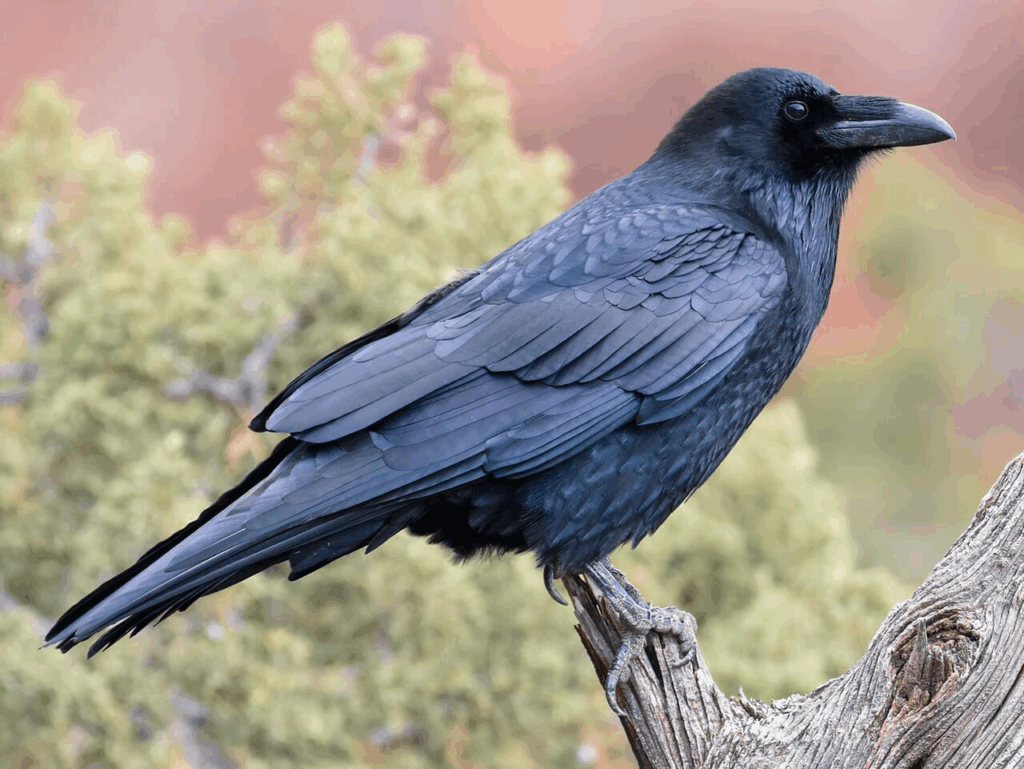
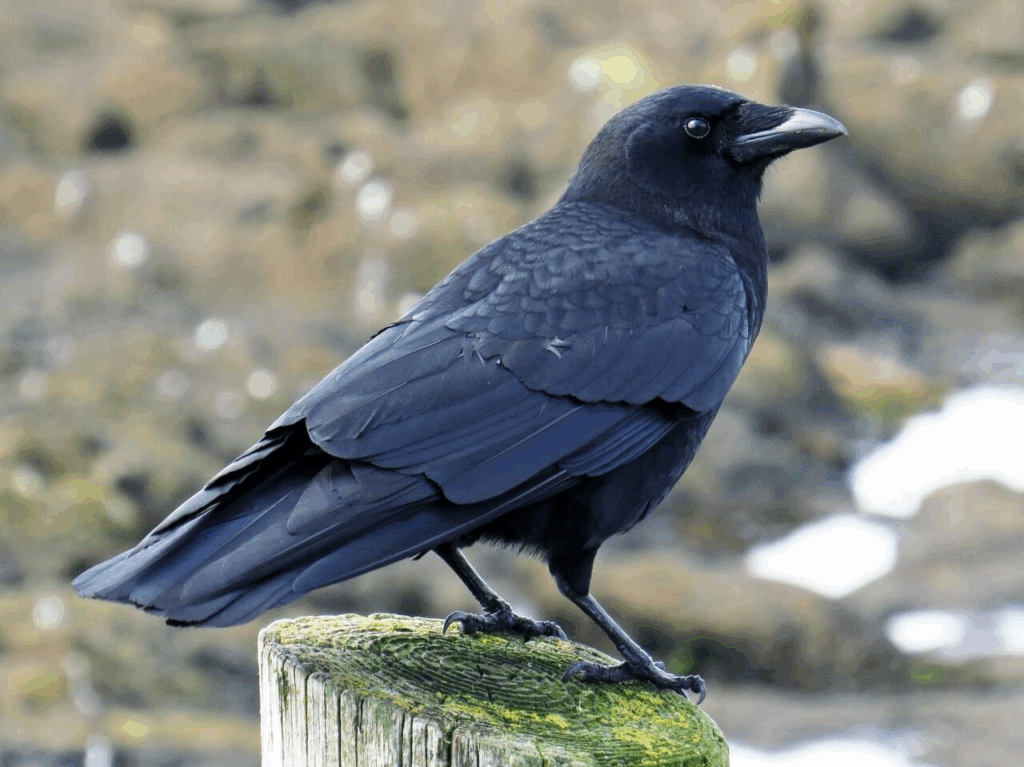
(1st Image Credit: Christopher Lindsey/macaulaylibrary.org, 2016), (2nd Image Credit: Henry Burton, macaulaylibrary.org, 2017)
As seen in the image, both birds have dark feathers and a similar structure, but vary in head and beak shape. The beak of the raven is slightly larger than the crow’s; the beak first points outwards, then slopes down, but the crow’s beak only dips downward. Also, the raven on the left is larger than the crow, with a wingspan of 45.7- 46.5 inches, while the crow only has a wingspan of 33.5-39.4 inches. Lastly, the crow has a square-shaped tail, while the raven’s tail is pointed at the end. These contrasts make identification easier for these species, and despite differences in habitat or behaviour, they are still distinguishable.
Birdwatching without any online tools is also common and yields a variety of results. Setting up a birdfeeder in your backyard will attract a variety of birds, such as finches, sparrows, or doves. Bird feeders come in a variety of sizes and shapes; most are used for holding seeds, fruit, or nectar. Some examples of bird feeders are trays, hoppers, tubes, and window mounts.
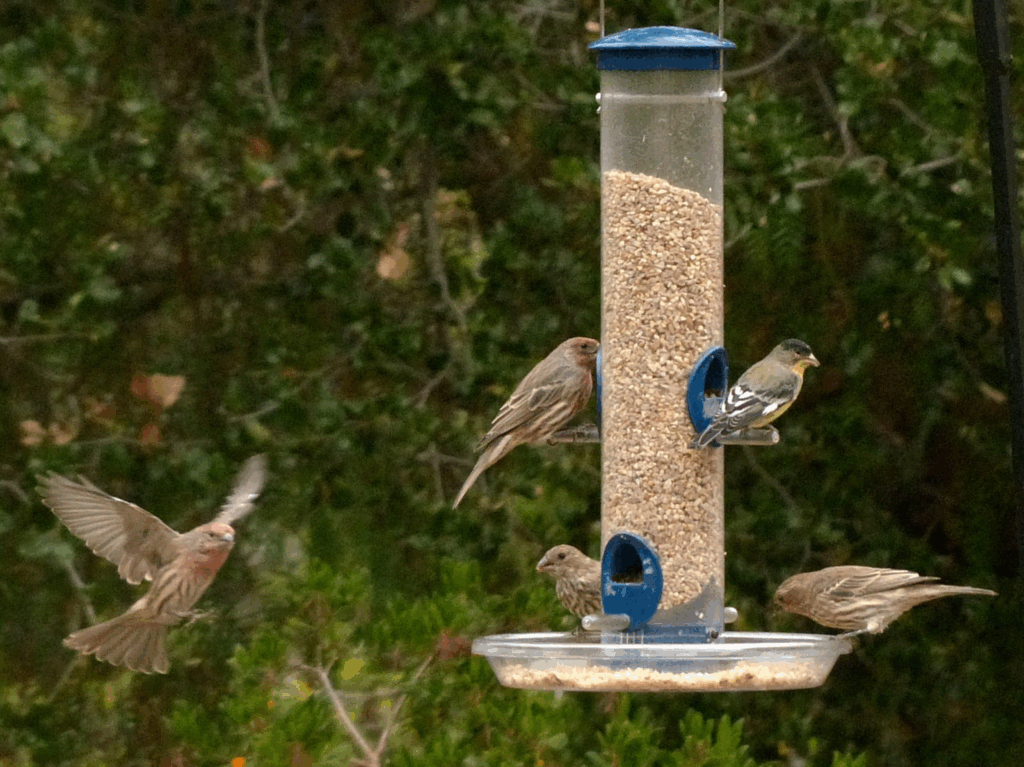
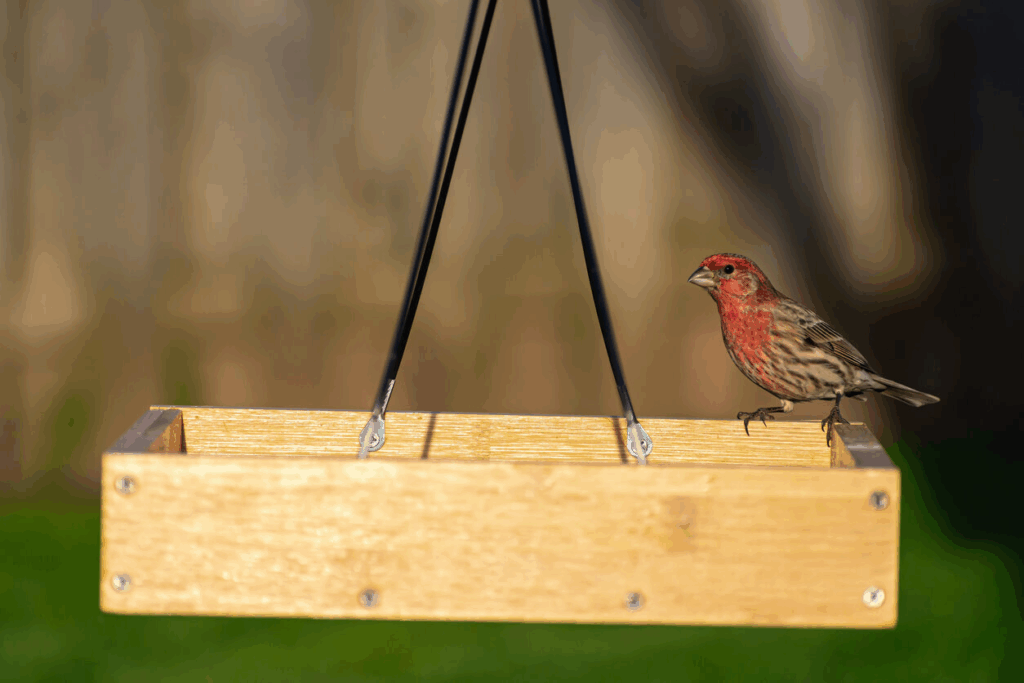
(Image Credit: Tempest.earth, photo of a tray bird feeder)
Trays are platforms that hold seeds and can be elevated or placed on the ground. Tube feeders consist of perches and holes and can be hanging or elevated off the ground. Hoppers are small houses that hold large amounts of birdseed. Seeds refill the tray as birds eat them, and the tray at the bottom will always stay full unless the house runs out of seeds. Window mounts are feeders suctioned to a window, and allow for a closer view of birds as they eat.
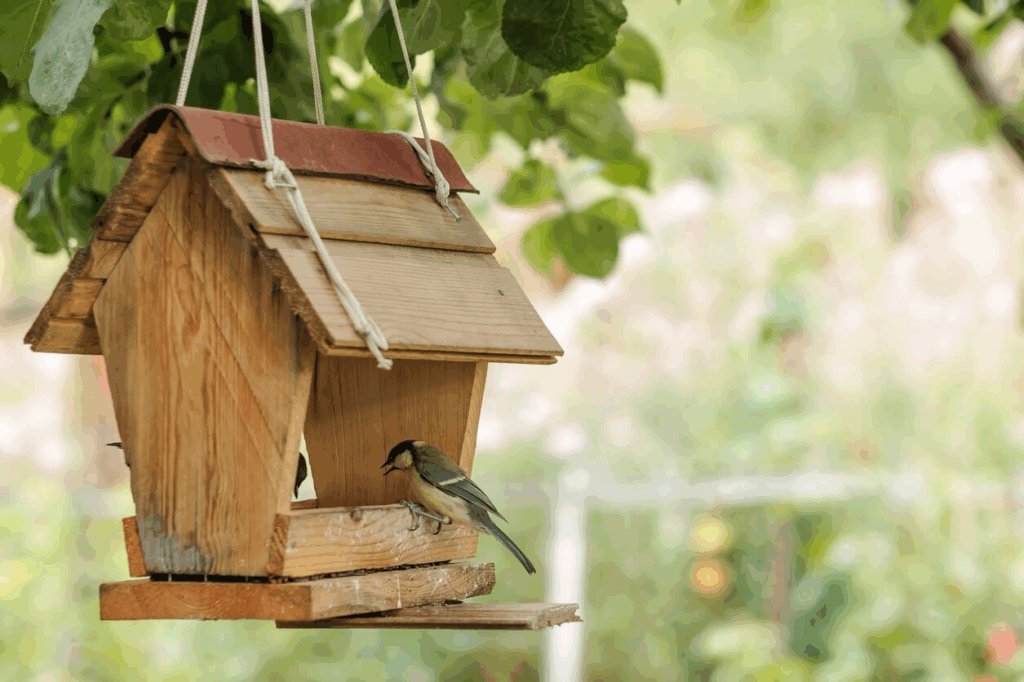
(Image Credit: Tempest.earth, photo of a hopper bird feeder)
It is important to note that birds cannot see glass well, and when setting up window feeders, make sure other items behind the glass are visible so birds will not try to fly through the glass. For the content of bird feeders, seeds such as sunflower seeds or thistle seeds will attract a large range of birds. Watch out for squirrels when setting up bird feeders; they often try to steal the birds’ food and can bring chaos to bird feeders, especially those that are hanging or located on the ground.
(Image Credit: Brian Washburn / Flickr, photo of a tube feeder)
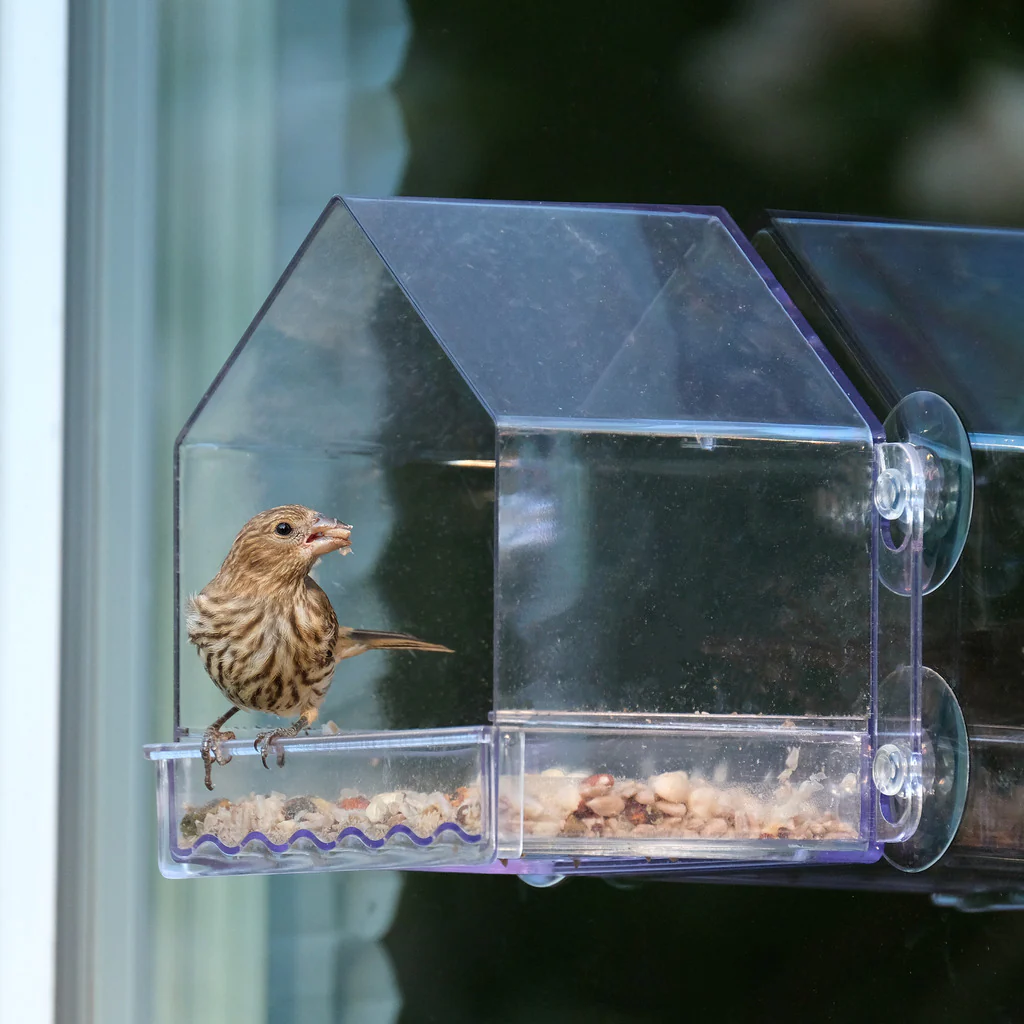
(Image Credit: Natureswaybirds.com, photo of a window feeder)
The last type of birdfeeder is the nectar feeder, which is used for birds such as hummingbirds. Hummingbirds only feed on nectar, and solutions for these feeders are made with water and sugar, which is similar to the nectar content found in flowers. Hummingbirds are attracted to bright flowers, and will also be attracted to feeders with bright colors. Many bases of hummingbird feeders are red, which makes it easier for these birds to locate. Hummingbirds are also very territorial birds and do not like to share with other hummingbirds. They will often fly past each other and try to move their rivals away from the feeder. If this occurs, setting up another feeder further away allows both birds to drink the nectar without any problem. Establishing bird feeders in your yard is a great way to start birdwatching, and observing the different birds will expand your understanding of the various species in California.
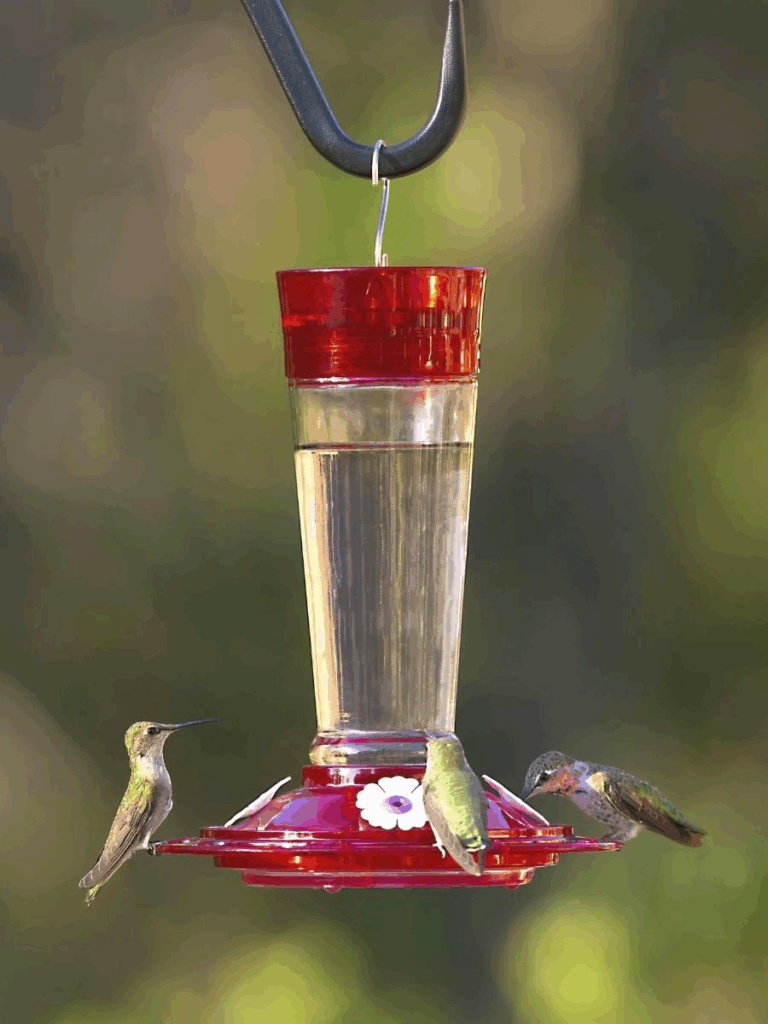
(Image Credit: WatsonsGreenhouse.com, photo of a hummingbird feeder)
Birds can also appear differently throughout their lifespan, and a series of molts contributes to variation in appearance. Birds of the same species may also exhibit a variety of colors. Most of the time, birds with vibrant colors are males, while females have a duller or less colorful appearance. The bright colors of males help them find a mate by impressing other birds in their habitat. An example of a difference in colors is the Anna’s Hummingbird, a common bird seen on the West Coast. These birds can be identified by their gray bodies and red feathers on their heads. Males often have brighter red feathers on their throats, while females exhibit green feathers on the top of their heads. Because of these differences, people may not perceive both animals as the same species without additional understanding. Also, due to hummingbirds’ small size, getting the species mixed up is common, and many look alike. Variations in color from the same species are common in animals and create unique sightings when birdwatching.
Over time, correct identification will occur quickly as different features and behaviours are studied. With this, birdwatchers gain a better grasp of their environment and can recognize birds in different locations. While there are thousands of species to observe, understanding repeated patterns in species is necessary to build a strong foundation of observation. Whether exploring a nearby town or an unfamiliar environment, note the different birds seen and observe the way they interact with their environment. Birdwatching is always a rewarding experience, especially when correctly identifying birds, and allows birdwatchers to connect closely with different aspects of their environment.
Here are the aforementioned links for binoculars:
https://www.allaboutbirds.org/news/browse/topic/binoculars-and-gear/
https://www.audubon.org/gear/binocular-guide
Works Cited
National Audubon Society, https://www.audubon.org/. Accessed 11 September 2025.
“A Beginner’s Guide to Backyard Bird Feeding.” The National Wildlife Federation Blog, 3 May 2011, https://blog.nwf.org/2011/05/a-beginners-guide-to-backyard-bird-feeding/. Accessed 11 September 2025.
Dudeck, Blair. “Binoculars & Gear.” All About Birds, https://www.allaboutbirds.org/news/browse/topic/binoculars-and-gear/. Accessed 11 September 2025.
Lecy, Derek. “Common Raven Overview.” All About Birds, https://www.allaboutbirds.org/guide/Common_Raven/overview. Accessed 11 September 2025.
Polan, Jason. “The Audubon Guide to Binoculars | Audubon.” National Audubon Society, https://www.audubon.org/gear/binocular-guide. Accessed 11 September 2025.
Rowell, Melissa, and Blair Dudeck. “How to Choose the Right Kind of Bird Feeder.” All About Birds, 22 August 2024, https://www.allaboutbirds.org/news/how-to-choose-the-right-kind-of-bird-feeder/. Accessed 11 September 2025.